REVIEW · JEWISH QUARTER & SYNAGOGUE TOURS
A Journey through Jewish Budapest – Walking Tour
Book on GetYourGuide →Operated by insightcities.com · Bookable on GetYourGuide
Budapest tells its Jewish story in layers. This 3-hour walk gives you a clear, human timeline of Jewish life in the city before WWII. You’ll cover major landmarks like the Dohány Synagogue and the Shoes on the Danube Bank—and you’ll be guided through what you’re actually looking at, not just where it is.
I love how the route moves through real places tied to different Jewish communities, from modern Zionism beginnings to orthodox life and community institutions. I also love that the tone includes reflection at the end, so the walk doesn’t feel like a sightseeing checklist. You’ll even hear from guides who are academics and published writers, with examples of leaders like Orsolya and Endres showing up in past tours.
One thing to consider: the Dohány Synagogue does require shoulders and knees covered, and entry needs a separate ticket. If you hate dress rules or you’re short on time for ticketing, plan ahead before you go.
In This Review
- Key things you’ll like about this tour
- A 3-hour walk through Jewish Budapest before WWII
- Meeting at Kamara Café on Dohany Street
- Herzl’s birthplace square and why it frames the whole story
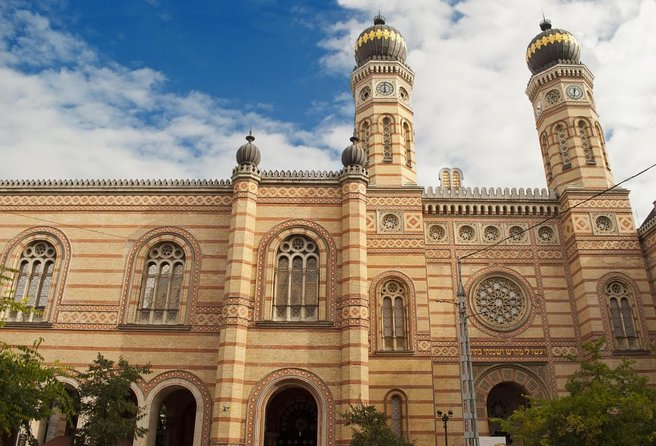
- Dohány Street Synagogue: Moorish Revival splendor with deep context
- Ghetto Wall Memorial and Kazinczy Street’s orthodox presence
- Status Quo Ante and Rumbach Street Synagogue facades
- Shoes on the Danube Bank: a guided ending that asks for attention
- Price and value: what $123 includes, and what you should budget
- What the guides bring (and why small groups help)
- Who should book this tour, and who might skip it
- Should you book this Jewish Budapest walking tour?
- FAQ
- How long is the Jewish Budapest walking tour?
- What’s included in the price?
- Is the Dohány Synagogue ticket included?
- Where does the tour meet?
- What language is the tour guide?
- What sites does the tour include?
- Are there any dress requirements?
- Is this tour only for private groups?
- What’s the cancellation policy?
Key things you’ll like about this tour
- Historian-led storytelling that explains what you’re seeing at each stop, not just dates
- Dohány Street Synagogue in its Moorish Revival splendor, plus the on-site museum and memorial spaces
- Ghetto Wall Memorial and mikve exterior moments that connect buildings to daily life and ritual
- Status Quo Ante history and why it still matters when you look at synagogue facades
- Kazinczy and Rumbach streets for a feel of the neighborhood’s different Jewish expressions
- Shoes on the Danube as a guided moment of remembrance, ending the walk on meaning
A 3-hour walk through Jewish Budapest before WWII
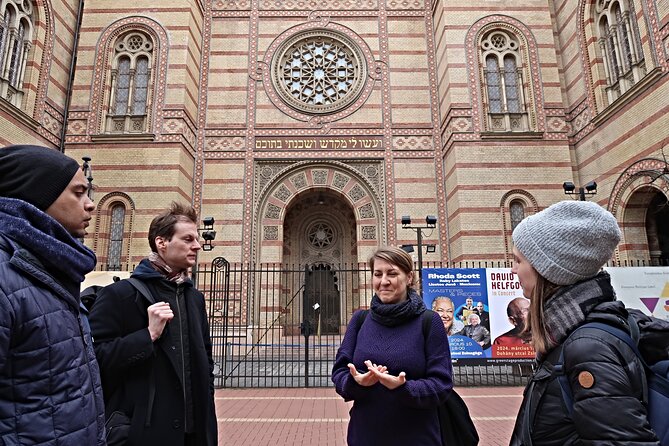
This tour is built around one big idea: Jewish Budapest wasn’t a footnote to Europe’s story. Before WWII, about a quarter of the city’s population was Jewish, and the walk shows that community as complex and varied, not monolithic.
You start by looking at origins—modern Zionism’s early roots—then you move forward into institutions you can still stand beside today. The pacing is tight enough to feel focused, but not so rushed that you lose the emotional weight of what’s ahead.
The experience also makes a point of connecting architecture and street geography to lived experience. That’s what turns a list of sites into a coherent picture of a city that changed fast.
You can also read our reviews of more walking tours in Budapest



Meeting at Kamara Café on Dohany Street
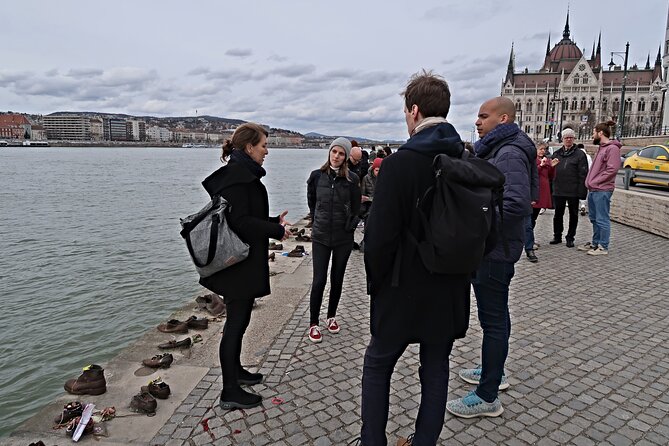
You’ll meet at Kamara Café, Dohany utca 1/A. This location is central and walkable, and it sets you up to see the Jewish quarter landmarks as part of a real neighborhood rather than disconnected attractions.
From the first stretch, you’re not just orienting—you’re learning the thread the guide uses to tie everything together. That’s a big deal on a walking tour: it helps you keep track of why one facade matters and why another one sits next to it.
The tour runs about 3 hours, and it’s offered in English with live guidance. Past group experiences also suggest the format can feel personalized, including cases where a small group had plenty of time for questions.
Herzl’s birthplace square and why it frames the whole story
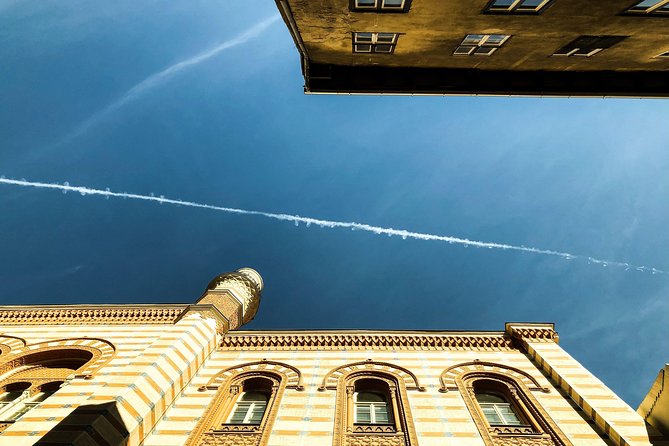
The walk begins at the square where Theodor Herzl, often called the father of modern Zionism, was born. Even if you only know his name from headlines, this stop helps you understand why the Zionist movement mattered in Jewish life across Europe.
You’re basically being given a lens. From here, the tour doesn’t treat Jewish history as only tragedy. It also points to debates, identity, and the desire for safety, community, and self-determination.
If you’re the type who likes to understand motivations—not just events—this opening will work well. It also helps you notice how political ideas become visible in later institutions and neighborhoods.
Dohány Street Synagogue: Moorish Revival splendor with deep context
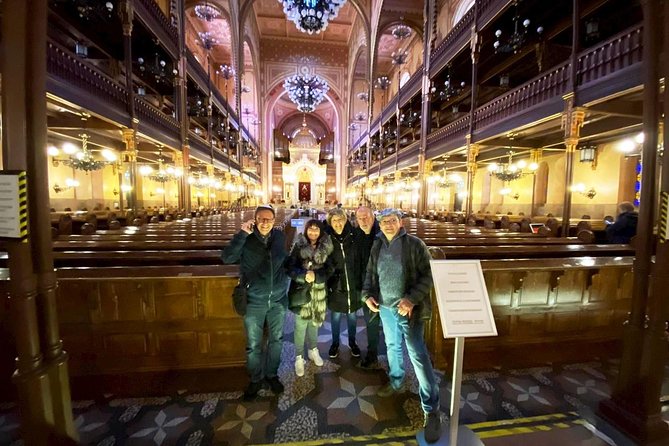
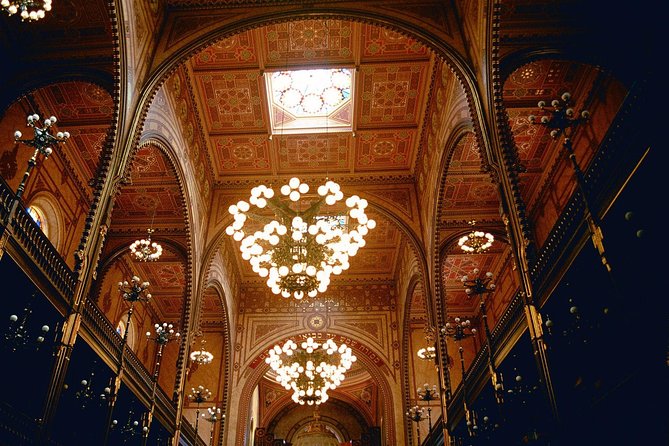
The biggest stop on your route is the Dohány Street Synagogue. This is the site the tour is built around, and for good reason: it’s described as the greatest Jewish house of worship in Europe, and you’ll see it up close.
You’ll tour the synagogue with help from a Jewish Studies Scholar, which is a smart match for a building this big. A guide can explain the symbolism and layout while also keeping the story anchored in what Jews lived with day to day.
Dress code matters here. Visitors are requested to have shoulders and knees covered, so bring a light layer or something you can throw over your arms. If you’re coming straight from a hot afternoon, plan for comfort without breaking the rules.
Inside the complex, you’ll move through the Temple of Heroes, the Jewish Museum, and a Memorial Park. That combination is valuable because it covers three angles at once:
- community life and cultural continuity
- remembrance of loss
- the way a major synagogue complex became a public center of memory
You’ll also be watching how the guide handles contrasts—between grandeur meant for worship and the historical reality that followed. It’s emotional, but it stays clear and factual.
Ghetto Wall Memorial and Kazinczy Street’s orthodox presence
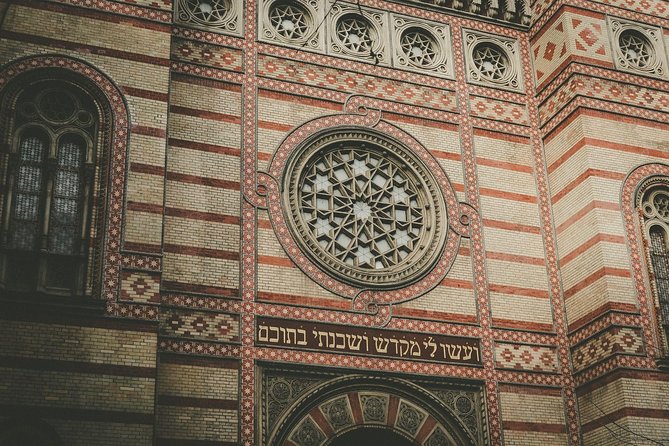
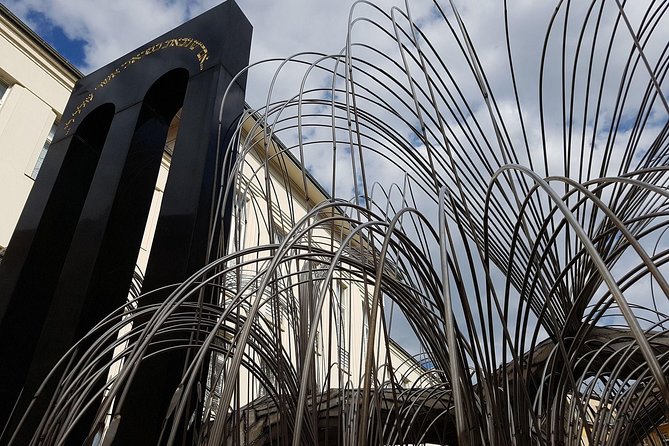
After the synagogue complex, the walk continues toward the Ghetto Wall Memorial, which was erected in 2014. This is one of those stops that changes how you look at a neighborhood. The message is not abstract—it’s tied to a physical boundary and the reality of where people were forced to live.
You’ll also pass by a luxurious mikve (Jewish ritual bath). Even if you only see the setting as you walk through, it helps you connect the synagogue story to bodily ritual and daily life. A ritual bath is not just an object; it’s a practice and a rhythm.
Then you head past the exteriors of the Art Nouveau orthodox synagogue on Kazinczy Street. Since you’re viewing it from outside, you’ll rely on the guide to point out what to notice—especially how architectural style and community identity show up in street-level details.
This section is good for people who like to learn in layers: how the same city can hold multiple expressions of Jewish life side by side. It also gives your eyes a break from the largest sites, while still keeping the history moving forward.






Status Quo Ante and Rumbach Street Synagogue facades
The tour’s story takes an extra, often-overlooked turn at Rumbach Street Synagogue. Here you’ll discover the history of the Status Quo Ante stream of Judaism, a reminder that community traditions weren’t only religious—they were also about governance, agreement, and rules that helped keep institutions functioning.
You’ll be observing the synagogue’s impressive facade while learning how different Jewish practices and leadership structures shaped community life. The facade isn’t just pretty. It’s like a label on a building, pointing to a particular kind of community identity.
This is also where the historian type of guide really matters. When the explanation is solid, a facade stops being a background photo spot and becomes part of the story you’re following.
If you tend to skip “details” because you want action, this might be the moment to slow down. The tour’s value is in these explanations that connect architecture to social organization.
Shoes on the Danube Bank: a guided ending that asks for attention
You’ll finish at the Shoes on the Danube Bank memorial. This place works on your senses immediately: it’s a memorial that feels almost literal. The tour invites you to reflect on the Jewish lives lost there and to sit with what the memorial represents.
This ending matters because the sites earlier in the route could otherwise feel like a museum circuit. By the time you reach the Danube, you’ve already seen Jewish community spaces—so the memorial hits harder and more personally.
One detail worth knowing: in at least one past tour, the guide helped participants show respect by cleansing a few stumbling stones, providing the necessary materials and joining in. That’s a strong sign of the tour’s approach—serious, respectful, and willing to add meaningful actions when the group is prepared.
After the reflection, the guide also ties the story to today’s Jewish community in Budapest, including the sense of revitalization and continuity. It keeps the walk from ending in only grief.
Price and value: what $123 includes, and what you should budget
The tour price is $123 per person for a 3-hour walking tour with a historian guide. That’s not cheap, so the key question is value: what do you get for the money?
You get expert interpretation of major sites you’ll otherwise see as tourist objects. The route includes multiple stops tied to big institutions, plus a final memorial moment that’s guided rather than left to your own interpretation. The tour also includes elements like a Jewish Studies Scholar for the Dohány complex, which adds real weight to the main highlight.
Budget-wise, plan for separate entry tickets for the Dohány Synagogue (listed as 14500Ft per individual). That cost is easy to forget until the ticket question comes up, so I’d factor it in when you’re deciding.
If you’re deciding between doing this on your own versus booking, think of it this way: you’re paying to get the story stitched together hour-by-hour. Without guidance, it’s still a great set of sites—but it’s far easier to miss how the details connect.
Also, the experience offers private or small groups, and in English. Smaller groups usually mean more questions and better pacing, especially for stops with emotional weight.
What the guides bring (and why small groups help)
One of the most praised elements is the quality of the guiding. The program notes that guides can include professors, doctoral students, historians, journalists, art critics, and published authors. That range is a plus because you tend to get more than one style of explanation—academic grounding plus clear communication.
Past experiences also highlight that guides can be genuinely welcoming and responsive to the group’s pace. There are examples of guides checking with the group before moving on and adjusting timing when needed.
Some tours have included personalization options too—one group even described having only a couple on the walk, which can make the whole experience feel more like a conversation than a lecture.
Who should book this tour, and who might skip it
This tour fits you best if you want history tied to place. You like walking through neighborhoods with a plan, and you appreciate guides who can explain how Jewish life in Budapest differed across time and community structure.
It’s also a strong match if you care about respectful context at major memorials. The ending at the Shoes on the Danube is not treated as a quick photo stop, and the tour’s reflection focus is part of the value.
If you’re someone who prefers purely visual sightseeing and hates dress rules, you might find the Dohány Synagogue requirements a nuisance—though it’s manageable with basic planning.
If you’re very sensitive to heavy topics, plan your emotional energy. The tour includes a memorial linked to persecution and mass killing, so it’s meaningful, not casual.
Should you book this Jewish Budapest walking tour?
I think you should book this tour if you want your time in Budapest to feel anchored in real stories and real buildings. The combination of the Dohány Synagogue complex, multiple orthodox and community references around Kazinczy and Rumbach streets, and the guided ending at Shoes on the Danube makes it more than a standard overview.
The main reason to hesitate is simple: you’ll need to handle the Dohány ticket separately and plan for shoulders and knees covered. If you can do that, the $123 price feels easier to justify because you’re paying for guided understanding, not just access.
For most people planning a first meaningful look at Jewish Budapest, this is a strong choice—especially if you want your history presented with care and clear structure.
FAQ
How long is the Jewish Budapest walking tour?
It runs for 3 hours.
What’s included in the price?
You get the 3-hour walking tour and a historian guide.
Is the Dohány Synagogue ticket included?
No. Dohány Synagogue tickets are not included, and the listed individual price is 14500Ft.
Where does the tour meet?
The meeting point is Kamara Café, Dohany utca 1/A.
What language is the tour guide?
The tour is offered with a live English tour guide.
What sites does the tour include?
You’ll visit key stops such as the Dohány Street Synagogue, the Ghetto Wall Memorial, the Rumbach Street Synagogue, and end at the Shoes on the Danube Bank memorial, along with several other related exterior and complex areas along the route.
Are there any dress requirements?
Yes. At the Dohány Synagogue, visitors are requested to have shoulders and knees covered.
Is this tour only for private groups?
No. It’s offered as private or small groups available.
What’s the cancellation policy?
You can cancel up to 24 hours in advance for a full refund.