REVIEW · HISTORICAL TOURS
BUSÓJÁRÁS Unesco Heritage Folklore Carnival in Mohács
Book on Viator →Operated by Explore Hungary · Bookable on Viator
Masks, rattles, and a real story. This is Busójárás in Mohács, Hungary’s end-of-winter carnival with UNESCO Intangible Cultural Heritage status. I like that you’re not fighting the public-transport crush to reach it, because the tour uses a private, air-conditioned vehicle and keeps your day from turning into transit misery.
I also like the way the festival’s core elements stay consistent: sheepskin cloaks, carved masks, and the loud rattlers and clapper bells that make the whole street scene feel physical. One thing to consider is that the food and drinks can run pricey once you’re in the center, so it helps to plan your spending (and your steps) before you’re surrounded by tempting stalls.
In This Review
- Key highlights worth your attention
- Why Busójárás in Mohács feels different from a normal carnival
- Getting from Budapest without the transit headache
- UNESCO intangible heritage, in plain terms
- The legend behind the masks: Turks, tricks, and Mohács Island
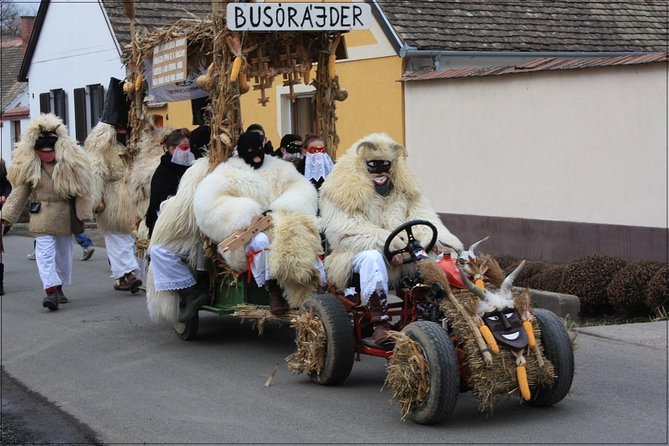
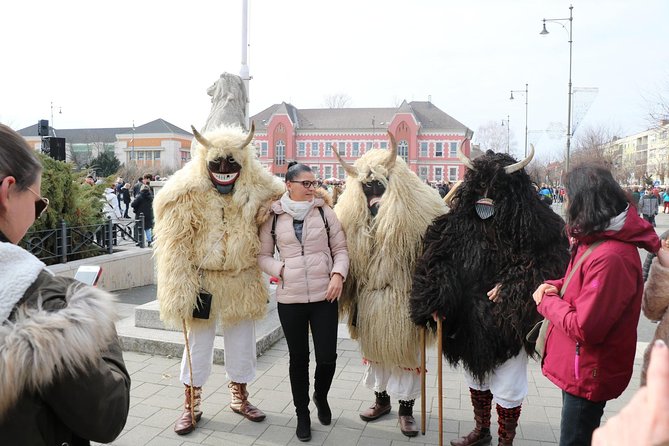
- What you’ll see on the street: cloaks, hay trousers, and rattlers
- The flexible day plan and what “10 hours” really means
- Food, pálinka, and pricing you should plan for
- When your hotel pickup matters (and when it doesn’t)
- Who this Busójárás private tour is for
- Price and value: why $250 can make sense here
- Should you book this Busójárás tour?
- FAQ
- How long is the Busójárás in Mohács tour?
- Where does the tour take place?
- What does the tour cost?
- Does the tour include pickup and drop-off?
- Is transportation private?
- Is the tour offered in English?
- Is there a fixed schedule once we arrive?
- Is there an admission ticket included?
- Is the cancellation refundable?
- Are service animals allowed and is it suitable for most travelers?
- When is the tour running?
Key highlights worth your attention
- UNESCO-listed tradition: Busójárás is on the UNESCO Representative List of Intangible Cultural Heritage
- Private vehicle from Budapest: avoid crowded public transit on the way to Mohács
- Legend-driven culture: masks and costumes tied to local stories about driving out the Turks
- No fixed timetable: a flexible day plan thanks to private transfer
- Big costume theater: woolly sheepskin cloaks, hay-filled trousers, carved masks, rattlers
- A welcoming atmosphere: expect warm hospitality and alcohol like pálinka to be part of the mood
Why Busójárás in Mohács feels different from a normal carnival
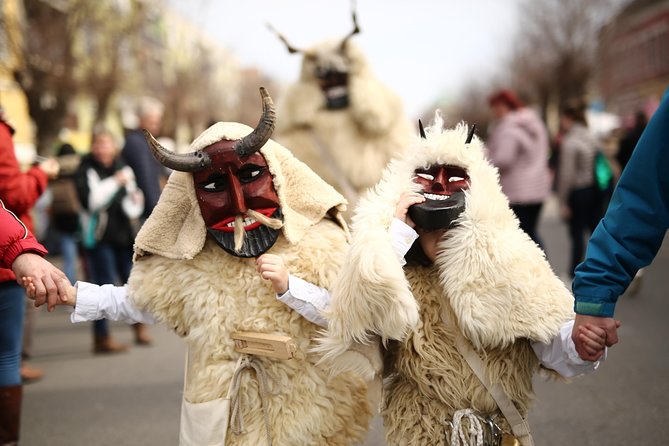
If you’ve seen carnival costumes before, Busójárás still hits in a different way. In Mohács, the outfits and noise are not just for show. They’re part of a long-running ritual tied to the end of winter and the start of spring, with ideas of protection and fertility carried through generations.
The UNESCO angle matters here because it tells you this is not a one-off local party. Busójárás is recognized as an important living tradition, meaning the festival’s character is meant to stay close to what locals do year after year. You’ll feel that in the repeatable “ingredients” of the event: the masks, the sheepskin layers, and the signature percussion-style rattlers.
And because this tour is built around a private transfer, you start the day calmer than you would with DIY transit. That matters when you’re spending most of your energy on costumes, street performances, and finding your way through a festival crowd.
You can also read our reviews of more historical tours in Budapest


Getting from Budapest without the transit headache
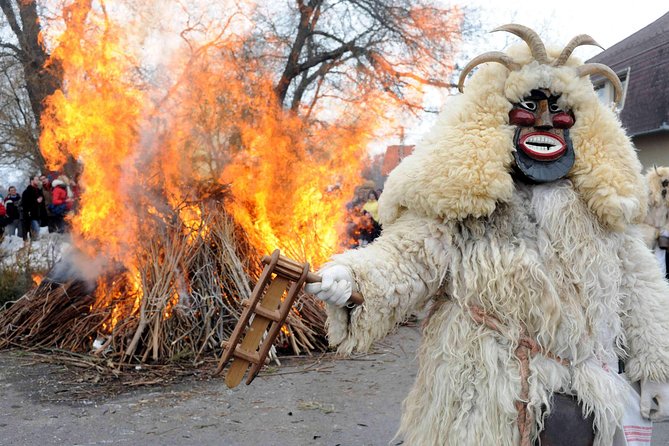
You’re paying for a simple upgrade: door-to-door private transportation. The tour is designed to pick you up and drop you off at your hotel, so you’re not juggling buses or trains in winter with day-of schedule uncertainty.
The vehicle is air-conditioned, which sounds basic until you’re sitting in traffic or dealing with temperature swings. Also, the tour is a private setup, so it’s only your group—no mixing with strangers or waiting around for other pickup points.
There’s another practical win: with a private ride, your timing can flex. The event runs on festival rhythm more than on a tight broadcast schedule, and this format is meant to respect that. Translation: you’re less likely to feel like you have to sprint from one thing to another just to keep the clock happy.
UNESCO intangible heritage, in plain terms
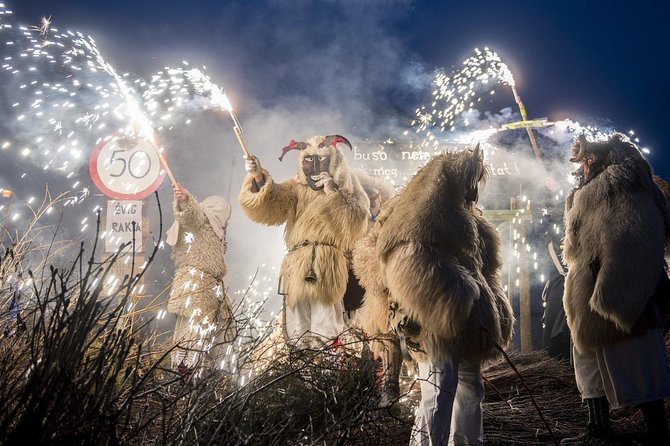
Busójárás is listed as UNESCO Intangible Cultural Heritage of Humanity, and the recognition isn’t just branding. UNESCO highlights living traditions, where community practices and knowledge are part of what’s being protected.
What this means for you is you’re watching a festival where the “how it’s done” matters. The costumes aren’t random fancy gear; they follow traditional elements like carved masks and sheepskin Busó cloaks. Even the accessories—the rattlers and clapper bells—aren’t optional decorations. They’re central to the festival’s sound and presence.
If you’re the type who wants more than photos, this helps. The festival’s vibe is tied to ritual behavior: characters moving through space with a purpose. That makes Busójárás more memorable than a carnival where everyone is just passing by for entertainment.
The legend behind the masks: Turks, tricks, and Mohács Island
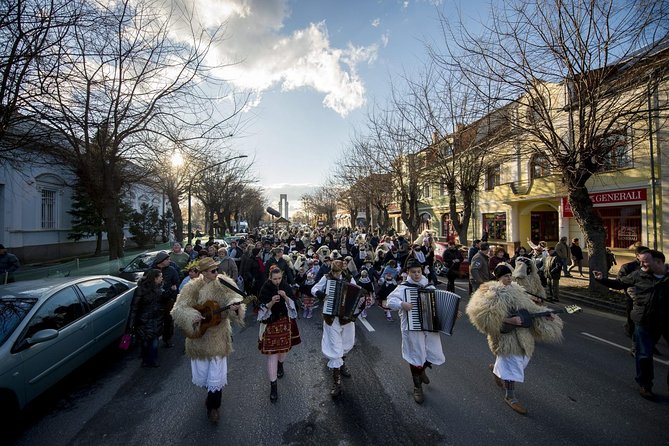
One reason Busójárás feels story-rich is that it has a legend that local people keep repeating. The tradition is linked to a time when locals fled Turkish occupation and ended up on the so-called Mohács Island, on the other side of the Danube. The tale goes that they dressed in disguise, returned across the river, and frightened the Turks so badly they panicked and ran.
Whether you treat the legend as history, myth, or both, it explains why masks are the centerpiece. The Busó characters aren’t wearing costumes to look cute. They’re taking on roles meant to unsettle, protect, and mark seasonal change.
You’ll also hear the broader comparison: the festival’s masked, end-of-winter spirit has similarities to other large carnivals and to Indigenous traditions from other regions of the world. That doesn’t mean they’re the same thing. It means humans keep reinventing the same idea—rituals that turn fear and energy into community celebration.
What you’ll see on the street: cloaks, hay trousers, and rattlers
This is the part you’ll feel in your camera roll and your ears. Busójárás is built around specific costume elements that show up consistently.
Here’s what to look for:
- Woolly sheepskin cloaks and trousers filled with hay
- Decorated stockings as part of the classic costume look
- Carved masks that shape the whole face-and-body performance
- Large, loud rattlers and clapper bells that create that immediate, startling sound
The costumes are heavy-looking and theatrical. Even if you’re just watching, you can tell the performers are using the gear to change posture and movement. That physicality is why this carnival feels so real.
And the noise isn’t background. It’s part of the message. The rattlers and bells give Busó characters a presence that stays in the air after they pass. If you’re sensitive to loud sound, consider ear protection, because the festival is built around it.





The flexible day plan and what “10 hours” really means
The tour runs about 10 hours from pickup to drop-off. Since it’s a private day trip with flexible timing, you’re not tied to a strict minute-by-minute agenda.
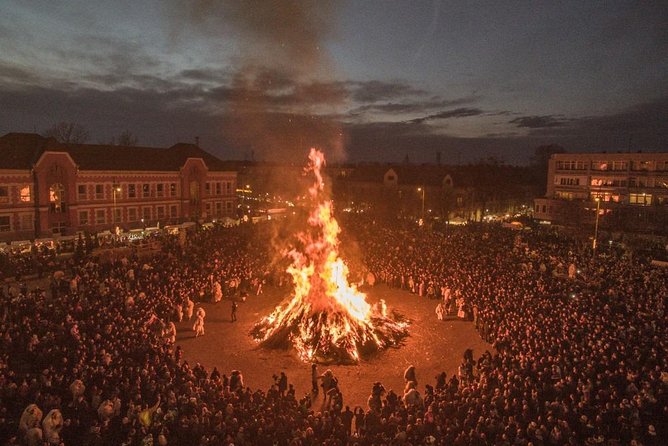
In practice, you should expect two phases: travel time between Budapest and Mohács, and focused time in the festival area. The festival itself is often experienced in a block of around two hours once you’re in the center. That’s long enough to see costumes, catch processions, and move with the crowd without feeling trapped.
Because you’re on a private transfer, you can also slow down. You don’t have to keep up with a group forced by public transport connections. Use the flexibility for real-life needs: a bathroom stop, a snack, or a quick moment to sit off to the side before heading back in.
If you’re tempted to pack your schedule tight, don’t. Busójárás works best when you give yourself time to wander and re-check the crowd. The costume performers can show up in different waves, and your best moments may come when you let the event unfold around you.
Food, pálinka, and pricing you should plan for
Festivals and snacks go together, but the money side can surprise you. I’d plan on eating before you get deep into the festival center, or at least keeping a simple budget in mind.
Eateries can be pricey once you’re surrounded by festival stalls. Also, there’s a social warmth to the day, and pálinka tends to be part of the atmosphere. That can be a fun cultural touch, especially if you like Hungarian spirits, but keep your pace smart. Loud, cold, and crowded can already be tiring—adding alcohol can turn an easy day into an exhausting one.
A practical approach: sip, don’t chug, and treat any alcohol as something that affects your walking and timing. If you don’t drink, it’s still worth going, but you’ll want to be direct with yourself about water and breaks.
When your hotel pickup matters (and when it doesn’t)
This is a door-to-door tour, which is one of its biggest value points. Hotel pickup saves time, and it also reduces the mental load of getting to the right transfer point in Budapest before you head out.
It also helps if you’re traveling with luggage or you don’t want to deal with buses or metro changes in the morning. Winter days go fast. Your time is better spent in Mohács watching Busó costumes and the parade energy than negotiating a map at the wrong station.
That said, the real test of convenience is where you end up in the festival area. Even with a private ride, festival centers can be tricky to drive into. Build in a bit of walking once you’re near the action, and wear shoes that handle uneven, possibly icy ground.
Who this Busójárás private tour is for
This is a great match if you want the real thing with fewer hassles. You’ll love it if you:
- prefer private transport over public transit stress
- care about UNESCO-listed cultural traditions, not just sightseeing photos
- like costumes with meaning, like carved masks and ritual soundmakers
- want flexibility so you can enjoy rather than race
It may be less ideal if you hate crowds or loud noise. But honestly, even then, going at all might be worth it if you take control of your pace—pause when you need to, and plan for sound.
It’s also a smart choice for small groups. Since it’s private and only your group participates, the experience feels more like a shared day out with a guide’s direction than a cramped hop-on-hop-off model.
Price and value: why $250 can make sense here
At $250 per person, this isn’t a budget impulse buy. But it’s also not priced like a fancy, luxury-only experience. The value comes from what you’re purchasing: door-to-door private transport plus flexible timing plus the comfort of an air-conditioned vehicle.
Let’s put it in traveler math:
- If you tried DIY, you’d still spend time getting to Mohács, and you’d risk losing festival time to connections.
- Once you factor in the cost of private car service (even with a driver only) and your time saved, the tour can start looking reasonable.
- You also get an organized flow that’s built around the event, not around a public transit timetable.
The biggest argument for paying is how it protects your day. You don’t want your trip to Busójárás to feel like a workout. This setup keeps you moving toward the fun, not away from it.
Should you book this Busójárás tour?
If you care about cultural festivals and you prefer low-stress logistics, I’d book this. Busójárás in Mohács is the kind of event where the details matter: masks, sheepskin cloaks, hay-filled trousers, and the rattlers that turn sound into part of the tradition.
The private transport is the difference between seeing it and simply surviving the commute. Add door-to-door hotel pickup, flexible timing, and an English-speaking guided format, and you get a day trip that feels designed for real people.
My only caution: if you’re budget-sensitive or sound-sensitive, go in with a plan—set your snack money, and bring a strategy for pacing. Done right, this is absolutely the kind of tradition you’ll remember long after the photos fade.
FAQ
How long is the Busójárás in Mohács tour?
It runs for about 10 hours (approximately).
Where does the tour take place?
The festival visit is in Mohács, and the tour starts from Budapest, Hungary.
What does the tour cost?
The price is listed as $250.00 per person.
Does the tour include pickup and drop-off?
Yes. It’s a door-to-door tour, and the provider picks up and drops off all travelers at their hotel.
Is transportation private?
Yes. It includes private transportation in an air-conditioned vehicle, and it’s a private tour/activity where only your group participates.
Is the tour offered in English?
Yes, it’s offered in English.
Is there a fixed schedule once we arrive?
The tour uses private transfer with no fixed schedule, so timings can be flexible.
Is there an admission ticket included?
The festival stop is listed with admission ticket free.
Is the cancellation refundable?
Yes. You can cancel for a full refund up to 24 hours in advance of the experience start time.
Are service animals allowed and is it suitable for most travelers?
Service animals are allowed, and it notes that most travelers can participate.
When is the tour running?
It’s offered during the period 02/28/2025 to 02/27/2026, with opening hours shown as Monday 10:00 AM to 8:00 PM.