REVIEW · IMMERSIVE MUSEUMS & EXPERIENCES
Budapest: Virtual Reality Tour in 8 Languages
Book on GetYourGuide →Operated by VR Tours · Bookable on GetYourGuide
History comes at you in 3D. This Budapest VR tour sends you from medieval castle building to WWII ruin and the 1956 uprising, right while you’re standing in the Castle District. You get expert context through an audioguide, so the visuals don’t just look cool. They mean something.
I especially like the way the tour mixes tech with walking. You’re not stuck in one room. You move between six VR moments, and your guide helps you keep your bearings as the story jumps across time. The other big win for me is the story coverage: the audioguide explains what you’re seeing and why it matters in Hungarian history.
One consideration: this is a headset experience with a light hike, and it’s not for everyone. If you’re prone to migraines, afraid of heights, or have epilepsy or heart problems, this setup may not be a good match.
In This Review
- Key things to know before you go
- Time-Travel VR in the Castle District: What You Actually See
- Starting at Chain Bridge: How to Find Lánchíd u. 23
- Six VR Stops Across Centuries: The Walking Story in Plain Terms
- The Bird’s-Eye View Over Budapest: Great for First-Timers, Tricky for Some
- Headsets, Comfort, and Motion Safety: Make This Work for Your Body
- Languages and Storytelling: 8 Voices, One Timeline
- Value for $39: Why This Might Be Worth It
- Who This Tour Fits Best (and Who Should Skip)
- Booking Smart: Timing, What to Bring, and What to Expect
- Should You Book This Budapest VR Tour?
- FAQ
- How long is the Budapest VR tour?
- Where do I meet for the tour?
- What time should I arrive?
- What languages are available?
- Do I need a deposit for the VR headset?
- What should I bring with me?
- Is it suitable for everyone?
Key things to know before you go
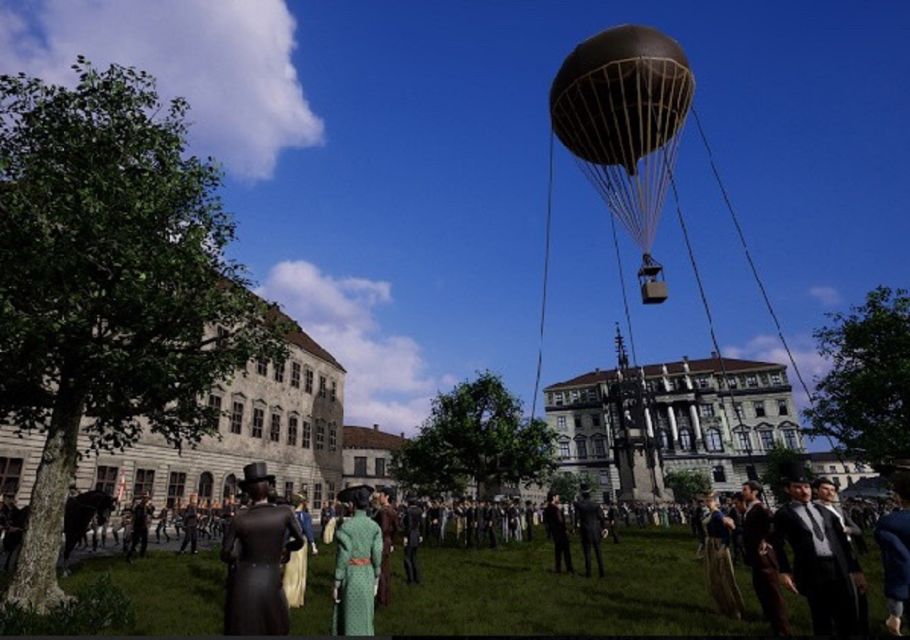
- VR across major eras: medieval construction, battles, WWII destruction, and the 1956 revolution
- Six scheduled VR stops with guided help between them around the Castle District area
- City-scale perspective with a bird’s-eye view over Budapest
- 8 languages via audio plus a live guide in English and Hungarian
- Hygiene and comfort: sterile headset, and a hygienic mask available upon request
- Deposit required for the VR headset (passport/ID or 200 euros)
Time-Travel VR in the Castle District: What You Actually See
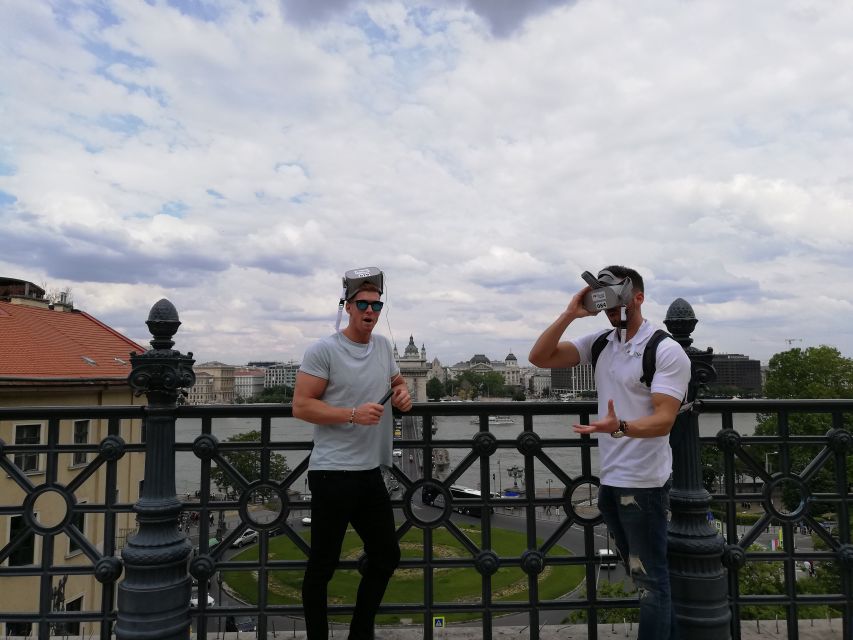
If you love Budapest’s “layer cake” of history, this tour is built for you. You’ll start on the Buda side and spend time in the Castle District area, where the setting already looks like the past. Then the VR does the heavy lifting: it shows the Castle District as it was in earlier centuries and during modern upheavals.
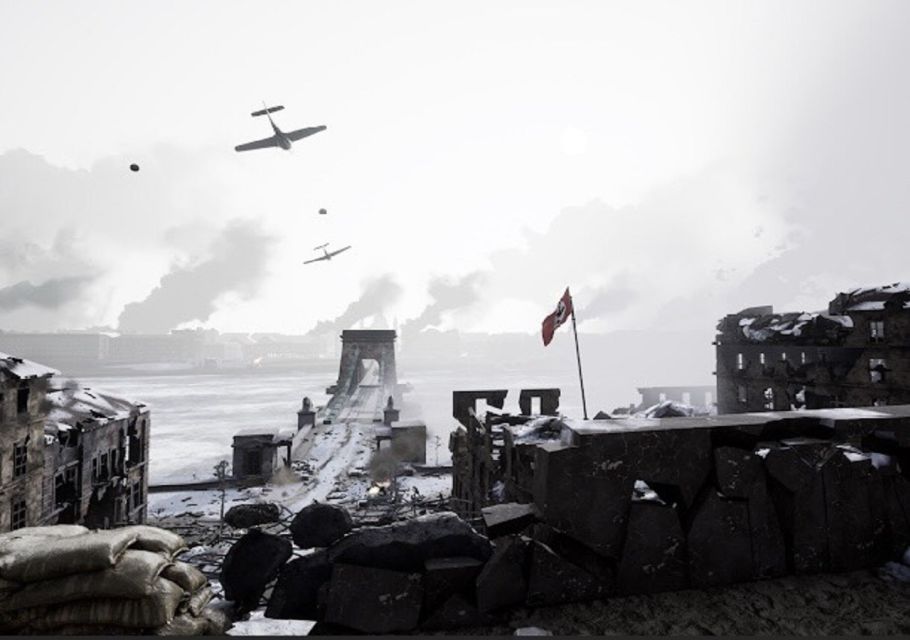
You’ll see highlights tied to the big names you likely came to admire anyway, especially the Buda Castle and Royal Palace area. The visuals aren’t just pretty reconstructions. They include major conflict scenes too: brutal battles, the destruction tied to WWII, and the eruption of the Hungarian Revolution in 1956. The audioguide helps connect the dots so you understand what’s happening, not just when it happened.
This is also where the tour becomes more than a gadget demo. At each VR moment, the audio guide walks you through the “why.” It explains the intricacies of what’s unfolding and frames each event in the larger story of Hungarian history. That’s a big reason the experience lands well for first-timers and history lovers alike.
In short, you’re using VR to build an internal map of Budapest’s past: castle power in the Middle Ages, conflict that reshaped the city in WWII, and political upheaval in 1956.
You can also read our reviews of more tours and experiences in Budapest.



Starting at Chain Bridge: How to Find Lánchíd u. 23
Logistics matter for short tours like this, and the meeting point is easy once you know what to look for. Meet at Budapest, Lánchíd u. 23, 1013 Magyarország, on the Buda side of the river. The instructions say to look for the VR Tour flags, facing the street.
Plan to arrive 15 minutes early. That extra time helps you get through gear setup without feeling rushed. The tour includes VR headsets and a sterile setup, plus there’s an option for a hygienic mask if you’d like one.
The tour then heads into the Castle District for the main experience. Between VR stops, you’ll walk, so you’ll want shoes that handle uneven sidewalks and a bit of uphill energy. The tour is described as a light hike, and in this part of Budapest, light still means “bring your legs.”
Six VR Stops Across Centuries: The Walking Story in Plain Terms
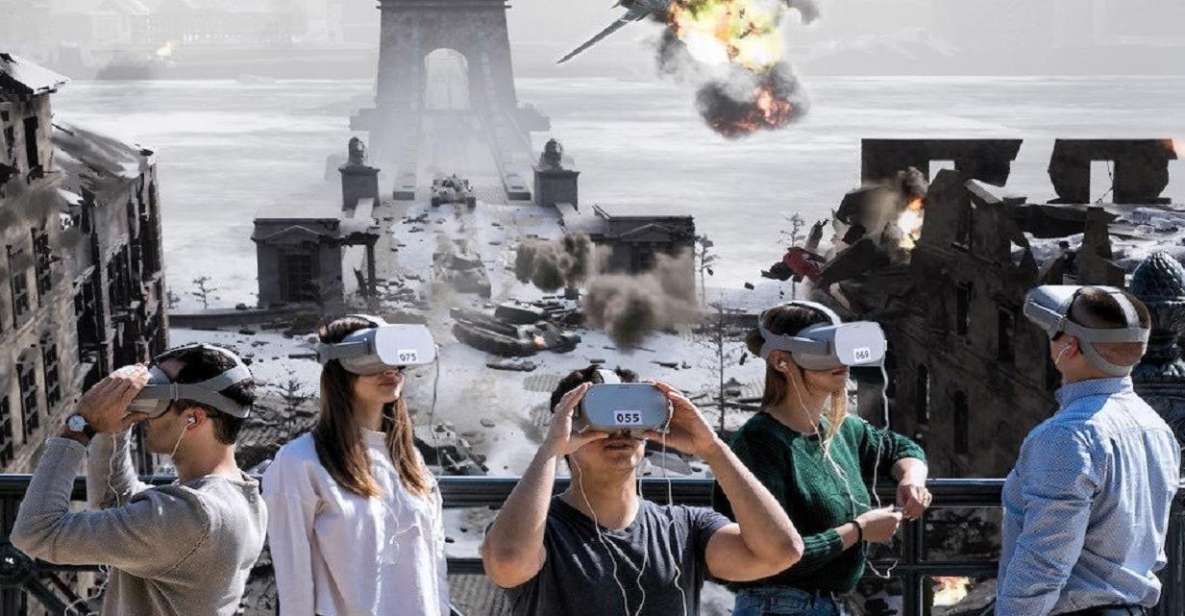
You’ll have around six VR stops spread through the tour. You’ll walk between them, and your guide will help you get around while you’re wearing the gear. The pacing is designed so the history jumps don’t feel random. Each stop contributes a new piece of the puzzle, from medieval power and construction to modern destruction and revolution.
Here’s the arc you should expect:
1) Medieval construction and the castle coming together
Early on, the VR rockets you back to the time when the castle was being built. This is the “origin” phase. Even if you’ve seen photos of the castle, VR makes you understand scale and development: how the place might have looked while it was still changing.
2) Battles and turning points
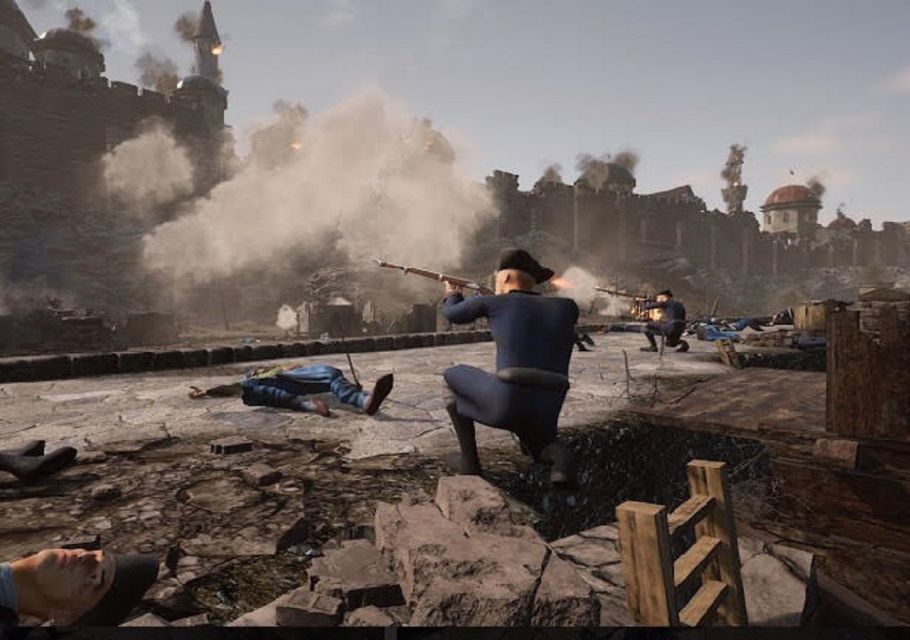
Then the story shifts into conflict. You’ll watch brutal battles and significant events that shaped Budapest. This is the part where the tour’s tech earns its keep. Instead of reading about battles, you experience them visually, then get the historical context from the audioguide.
3) A bird’s-eye view over the city
At one of the moments, you’ll get a high vantage look over Budapest. This matters because Budapest isn’t just “pretty buildings.” It’s a city where geography drives stories: how people moved, where power concentrated, and why certain places mattered. The aerial moment helps you connect what you’re seeing in VR to real-world orientation.
4) WWII destruction and the shock of modern history
The tour doesn’t stay in the romantic past. It moves into the devastation tied to World War II, showing the utter destruction of the area. For a lot of visitors, this is the emotional pivot. The guided audio helps you understand that the city you’re walking through now is layered over painful events.
5) The Hungarian Revolution in 1956
Next comes the uprising. You’ll witness how the Hungarian Revolution breaks out in 1956. The audioguide frames why the moment mattered, so it doesn’t turn into just another dramatic scene. It’s tied back to Hungary’s larger historical story.
6) Final wrap with a clearer mental picture
By the end, the repeated pattern of “walk a bit, view a scene, hear the context” helps you retain more than you’d get from a quick stop-and-scroll approach. You leave with a timeline you can actually point to in your mind: Middle Ages build-up, wartime destruction, then revolution.
One more practical note: because you stop six times, the tour feels structured rather than random. You’re never waiting forever for the next “big moment,” and your guide keeps the walking manageable.
The Bird’s-Eye View Over Budapest: Great for First-Timers, Tricky for Some
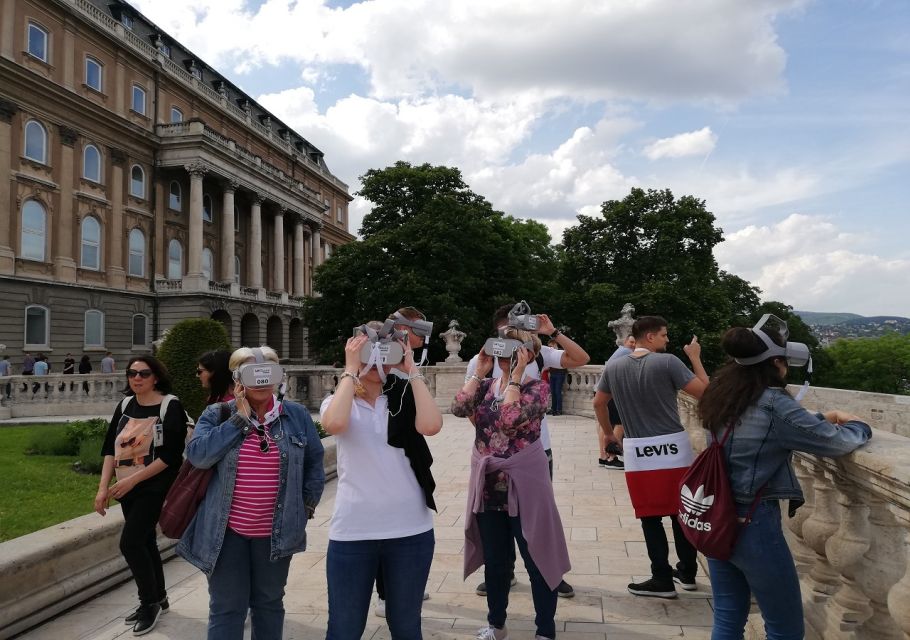
That city-wide view is one of the tour’s stated highlights. It’s also one of the most useful moments for understanding Budapest from above. When you see the city at a higher perspective, the Castle District stops being an isolated hilltop landmark. It becomes part of a bigger map.
The catch is obvious but important. The tour is not recommended for people who are afraid of heights. If you get uneasy with high-looking visuals, skip this one. Even if you think you can handle VR, that bird’s-eye effect is exactly what triggers discomfort for some people.
If you’re comfortable with heights (and generally fine with VR visuals), that aerial moment can help you connect the skyline you’ve been photographing with the historical events the audio tells you about. It turns the city into a place with logic, not just views.
Headsets, Comfort, and Motion Safety: Make This Work for Your Body
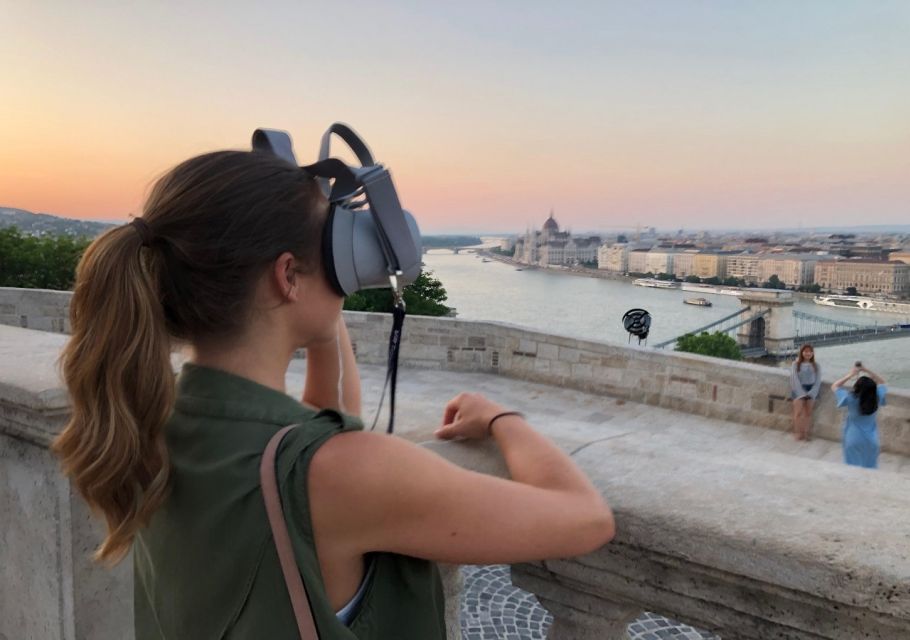
This experience is built around wearing a VR headset, and that means comfort and safety matter more than with a standard walking tour.
Here’s what you can count on:
- You’ll be provided with virtual reality gear and a sterile headset setup.
- You can request a hygienic mask.
- You’ll need to present a passport or ID card, or provide 200 euros as a deposit for the headset.
You’ll also want to bring what you already know works for you: comfortable shoes for the light hike. And in hot summer tours, plan ahead with something to drink. The tour includes walking time, and the Castle District area can be sun-baked.
Now the safety reality check. This activity is specifically listed as not suitable for people who:
- suffer from migraines
- have epilepsy
- have heart problems
- are afraid of heights
- have mobility impairments
If any of those apply, I’d take the warning seriously. VR can feel different from walking through a museum or watching a film. If your body has known triggers, this is one of those experiences where it’s better to choose comfort and safety.



Languages and Storytelling: 8 Voices, One Timeline
Budapest is multilingual for visitors, and this tour covers that challenge well. Your live guide speaks English and Hungarian. On top of that, there’s an audio guide with eight languages: English, Chinese, German, Hungarian, Spanish, Russian, Italian, and French.
For you, that means you can follow the story clearly even if your group is mixed. The audioguide doesn’t just play background sound; it explains what you’re seeing at each stop and contextualizes why each event matters.
This matters because the tour spans huge historical swings:
- medieval castle building
- battles and major events
- WWII destruction
- the 1956 uprising
If you’ve ever struggled to keep up on history tours because the narration moves too fast, the audio system here gives you a steadier grip. You’re still moving, but your understanding stays anchored.
Value for $39: Why This Might Be Worth It
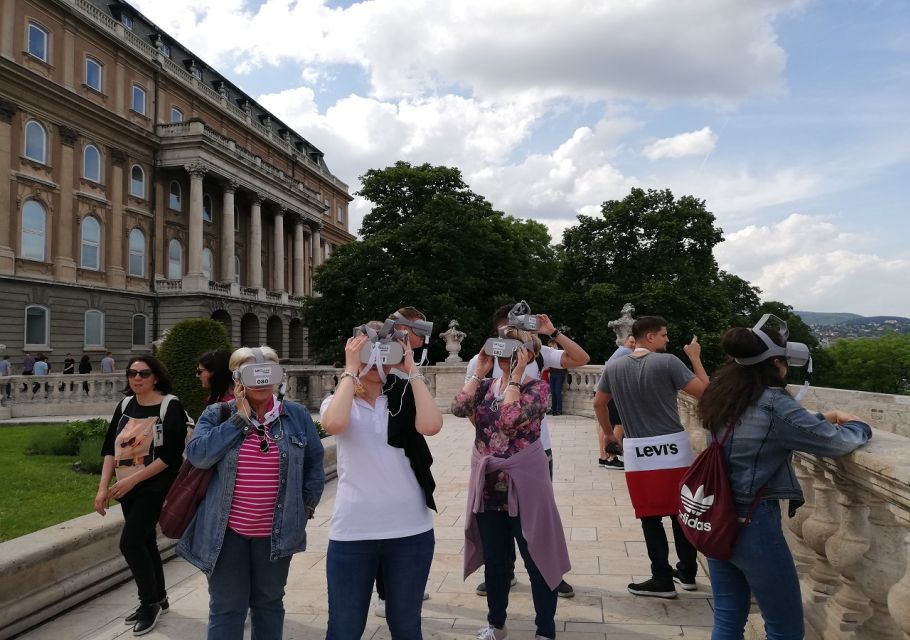
At $39 per person, you’re paying for more than admission to a site. You’re paying for:
- VR equipment (including a sterile headset setup)
- a tour guide who leads you between stops
- a structured “six scenes” experience
- multi-language audio context
A traditional walking tour in Budapest can also be excellent, but it usually has one limitation: it can’t show you what a medieval battle or a WWII destruction scene looked like in the actual place you’re standing. This VR format solves that by putting you inside visual reconstructions tied to real locations in the Castle District.
Is it perfect value for everyone? Not necessarily. If you’re allergic to technology, or you already know every historical date, you might prefer reading or museum time instead. Also, if VR makes you uncomfortable, no history bargain helps.
But for many visitors, the pricing makes sense because the tour includes the gear and the guided narrative. You’re not hunting for equipment, and you’re not doing the heavy lifting of stitching together the eras on your own.
Who This Tour Fits Best (and Who Should Skip)
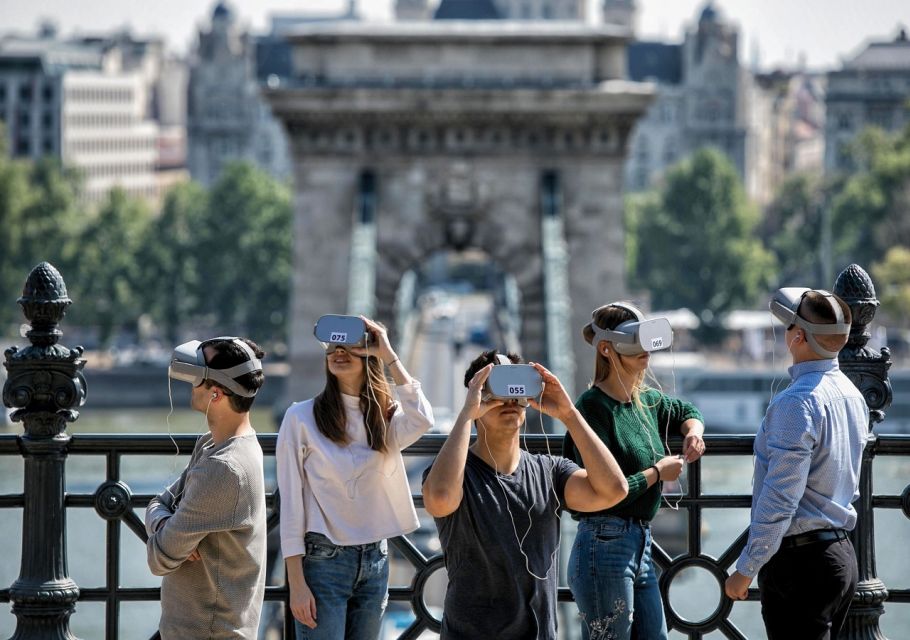
This is ideal if you fall into one of these buckets:
- You want a fast history timeline without sitting in a lecture hall.
- You like learning in a visual way, especially when the visuals are tied to recognizable landmarks like Buda Castle and the Royal Palace area.
- You’re short on time but still want a meaningful Budapest experience beyond classic photos.
- You enjoy guided structure. The guide helps you between VR stops, so you aren’t left figuring out where to go next.
It’s also a solid choice if you’re traveling with a partner and want something shared. One review described learning a lot in a fun manner and being amazed by VR quality, with the feeling of being in the middle of battlefields. That’s the kind of emotional “wow” moment this tour aims for.
You should skip it if:
- VR triggers migraines or you have epilepsy
- you have heart problems (as listed)
- you’re afraid of heights
- mobility limitations make walking a struggle
Booking Smart: Timing, What to Bring, and What to Expect
The tour duration is listed as 1.5 hours, with “check availability” for start times. The tour description also notes roughly 2-hour pacing. Either way, plan your evening so you’re not rushing afterward. Between gear setup and the walking segments, you’ll want breathing room.
A few things to have ready:
- Passport or ID card, or 200 euros for the headset deposit
- Comfortable shoes
- Something to drink for hot-weather tours
If you like flexible plans, there’s also free cancellation up to 24 hours in advance and a reserve-now, pay-later option. That helps when you’re juggling multiple Budapest activities.
Should You Book This Budapest VR Tour?
Book it if you want to understand Budapest fast, and you’re curious about the Castle District not just as a viewpoint, but as a stage for centuries of change. For first-timers, the combination of guided walks, six VR scenes, and contextual audio is a strong deal for $39. You’ll come away with a clearer sense of the timeline: medieval construction, battles, WWII destruction, and the 1956 revolution, plus a city view that helps everything lock together.
Skip it if VR makes you feel uneasy, if heights visuals bother you, or if you fall into any of the listed medical categories like migraines or epilepsy. In that case, you’ll be happier with a classic walking tour or museum visit where your body stays in control.
If you match the sweet spot—comfortable with short walking, open to VR, and hungry for history—this is one of those Budapest experiences that turns the city’s layers into something you can actually picture.
FAQ
How long is the Budapest VR tour?
The duration is listed as 1.5 hours, and you should check availability to see the starting times. The tour description also mentions roughly 2-hour pacing.
Where do I meet for the tour?
Meet at Budapest, Lánchíd u. 23, 1013 Magyarország. Look for the VR Tour flags facing the street.
What time should I arrive?
Arrive 15 minutes prior to your tour departure.
What languages are available?
The live tour guide is available in English and Hungarian. The audio guide is included in English, Chinese, German, Hungarian, Spanish, Russian, Italian, and French.
Do I need a deposit for the VR headset?
Yes. You’ll need to bring a passport or ID card, or provide 200 euros as a deposit for the VR headset.
What should I bring with me?
Bring a passport or ID card, wear comfortable shoes, and during hot summer tours bring something to drink.
Is it suitable for everyone?
No. It is not recommended for people who suffer from migraines, and it’s also listed as not suitable for people with epilepsy, heart problems, or fear of heights, and not suitable for people with mobility impairments.