REVIEW · BUDA CASTLE & FISHERMAN'S BASTION
Buda Castle’s Secrets with a Historian
Book on Viator →Operated by Budapest Explorers · Bookable on Viator
Budapest tells its secrets from Castle Hill. This historian-led walk threads you through the big sights and the painful ones, with a small-group feel and licensed historian storytelling that turns architecture into a timeline. I love how the route connects rulers, rebellions, and rebuilding in plain language, and I love the way you finish on the King Matthias fountain area with views that make the whole day click. The one possible drawback: several stops involve extra paid entry or transport beyond what’s included.
If you’re someone who likes to ask questions (and get straight answers), this tour matches that. Guides such as Petra, Monika, Rajmund/Raymond, and Judit have been praised for clear explanations and an unhurried pace, even when the Castle District is busy.
You’ll walk cobblestones, step through church interiors, and take in panoramas from terraces and a funicular top station. Entry is included for Matthias Church, while other major sights like Fisherman’s Bastion, Buda Castle areas, and the funicular ride are not included—so it’s worth planning for a few add-on tickets.
In This Review
- Key points worth knowing before you go
- Starting at the Holy Trinity Column: your orientation in Budapest
- Fisherman’s Bastion: postcard views and the real job behind them
- Matthias Church inside: where the legends meet the details
- The National Archives pass-by: WWII marks you can still see
- Sándor Palace: cobblestones, power, and the present-day connection
- Buda Hill Funicular: quick lift, big payoff panoramas
- Prince Eugene of Savoy’s equestrian statue: a Europe-wide power chapter
- Buda Castle Royal Palace terrace views: your payoff moment
- Fountain of King Matthias finale: why Hungarians still talk about him
- Price and value: what $65.31 buys you (and what it doesn’t)
- Who should book this tour, and who might not
- Should you book Buda Castle’s Secrets with a Historian?
- FAQ
- How long is the Buda Castle’s Secrets with a Historian tour?
- What language is the tour offered in?
- Is the Matthias Church entrance included?
- Do I need extra tickets for other stops?
- How big is the group?
- Can I cancel and get a full refund?
Key points worth knowing before you go
- Historian-led storytelling that links Hungarian turning points to what you’re standing in front of
- Matthias Church entry included, so you don’t waste time sorting tickets
- Views in multiple doses: Fisherman’s Bastion, the funicular, and the Royal Palace terrace
- WWII history in the mix, including visible bullet marks passed from the National Archives area
- Small group size (up to 10, with an overall cap of 15), which keeps questions from getting lost
Starting at the Holy Trinity Column: your orientation in Budapest
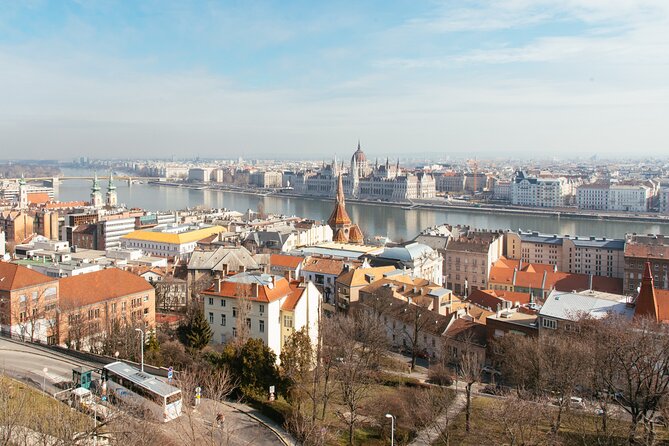
Your tour kicks off at the Holy Trinity Statue on Szentháromság u., right at the edge of Castle Hill’s story world. This is a good start point because it sets the tone: Budapest’s capital-level history is layered on top of older layers, and the guide’s job is to help you see the connections fast.
You’ll spend about 30 minutes here, and it’s not just background trivia. The framing is practical: why this district matters, how Hungary’s fortunes have swung over centuries, and how major buildings around you reflect those shifts. You’ll also be surrounded by architecture worth looking at on your own—but with a guide, you’ll understand what you’re seeing rather than just admiring it.
If you’re visiting early in your trip, this first stop helps you avoid the common Castle Hill problem: lots of impressive stuff, but no clear storyline yet.
You can also read our reviews of more tours and experiences in Budapest.



Fisherman’s Bastion: postcard views and the real job behind them
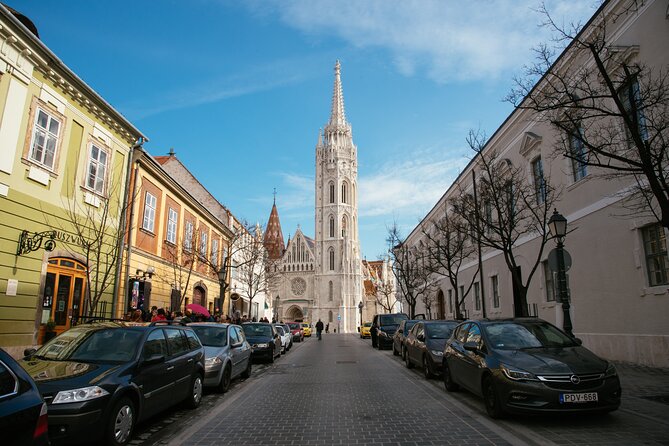
Next comes Fisherman’s Bastion, a spot everyone recognizes from photos and postcards. You’ll have about 20 minutes, enough time to take in the views and hear what the place is actually for, not just what it looks like.
Here’s the key idea I like: this is where you learn to separate appearance from purpose. The guide explains the bastion’s story and true function, so it clicks why it’s positioned the way it is and why the architecture was created the way it was.
You’ll want a ticket for this stop (admission isn’t included), so factor that into your day budget. Still, it’s one of the best places to orient yourself toward the lower parts of Budapest—especially if you can see how the hills line up with the river and the grand buildings across the way.
Matthias Church inside: where the legends meet the details
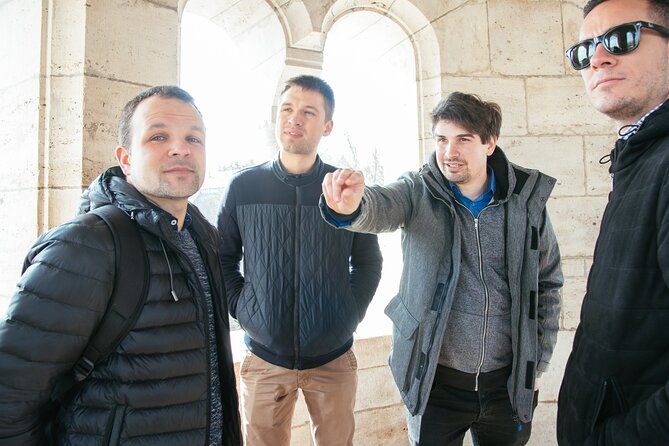
Matthias Church is the heart-and-soul stop, and it’s one of the few places where the tour includes entry. You’ll get around 30 minutes inside, which is smart because the building’s details deserve time.
The guide talks through legends and stories you can’t really guess from the outside. And you’ll see why many people argue it’s among the most beautiful churches in Budapest, not only for big visual impact but for the interior character you notice once you’re standing there.
A nice bonus from past groups: in at least one instance, an organist played a few tunes during the visit. You can’t rely on that every day, but it’s a reminder that Matthias Church isn’t a museum shell. It can feel alive.
Tip: go in with your phone charged and your eyes open. The guide will point out features you’d otherwise miss, and the experience becomes much more than a quick look-and-go.
The National Archives pass-by: WWII marks you can still see
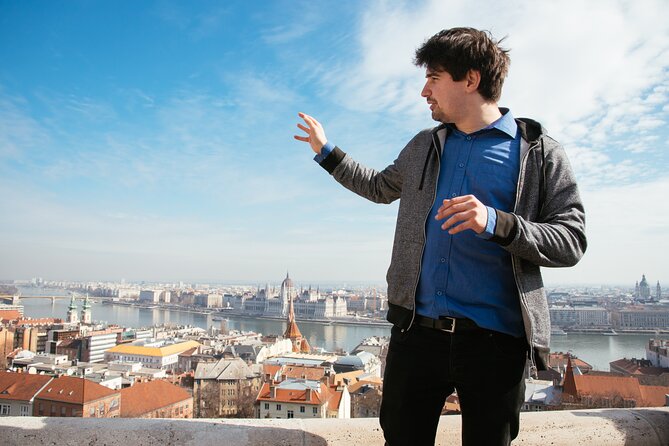
Between major showstoppers, the tour makes time for a darker thread of history. You’ll pass by the National Archives, a striking building with visible marks from WWII, including bullet holes.
This isn’t sightseeing-by-ads or a quick photo moment. The point is to help you understand that the Castle District’s story isn’t only about kings and cathedrals. It includes modern trauma too, and those scars are part of the city’s memory.
It’s a short stop in motion rather than a full visit, so you won’t get a long explanation break. But it’s enough to change how you look at the rest of the district afterward. Suddenly, the ornate stonework feels heavier, because you remember what it survived.
If you’re sensitive to war imagery, be mentally prepared. This is not graphic, but it is real.
Sándor Palace: cobblestones, power, and the present-day connection

You’ll then move through the Buda Castle complex streets and alleyways, with about 20 minutes devoted to getting yourself oriented and strolling toward Sándor Palace. The palace is the office of the Hungarian President, so it links the area’s royal past to Hungary’s present.
One reason I like this stop: the guide helps you move at walking speed rather than crowd speed. You’re not trying to cram everything into one photo. You get time to notice street layout, scale, and how the district feels when you’re moving along it as part of a path.
No entry ticket is included for this part, so you may see the palace area from the outside or from viewpoints allowed by the route. Either way, it’s valuable because you’re learning what kind of power lives here now, not only what used to live here.
If you enjoy political history, you’ll probably leave with a clearer sense of why Hungary’s leadership has always mattered in European terms.



Buda Hill Funicular: quick lift, big payoff panoramas
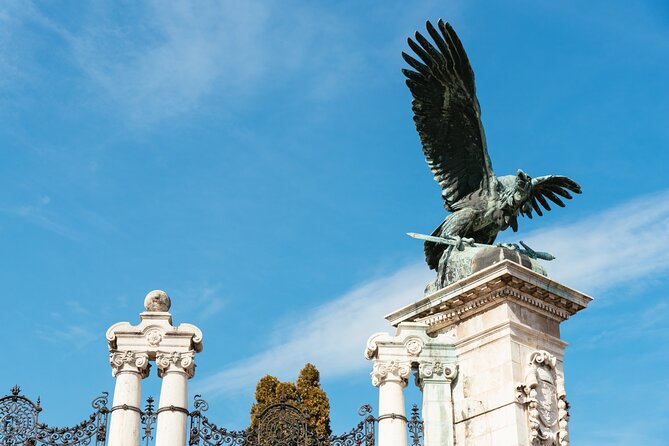
After the palace-area walking, you’ll head to the Buda Hill Funicular for about 10 minutes. The top station is where you get panoramic views over the Parliament area and toward the Pest side of the city.
This short transport moment does two things. First, it helps you catch your breath without losing time. Second, it gives you a different angle for the same city story you’ve been absorbing on Castle Hill.
The funicular ride isn’t included in the tour’s ticket package, so plan for an extra cost. But in return, you get an easy way to see the city from a higher vantage point, which is exactly what makes Budapest feel like Budapest.
If the weather is cold or rainy, this stop can also be a sanity saver: less uphill strain, more rewarded skyline time.
Prince Eugene of Savoy’s equestrian statue: a Europe-wide power chapter
Next you’ll meet Prince Eugene of Savoy’s equestrian statue for around 10 minutes. This is a small stop in time, but it carries a lot of meaning in the guide’s telling.
You’ll learn about a decisive military campaign that influenced European history for centuries. The guide also connects this to the Habsburgs and their relationship with Hungary, which helps explain why the Castle District isn’t just local pride. It’s part of a much bigger continental struggle.
I find statue stops can become dead weight on tours. This one doesn’t, because it’s tied to what you’ve seen already: imperial power, fortifications, and buildings built to project authority.
Admission isn’t required here, so it’s a low-cost, high-context addition.
Buda Castle Royal Palace terrace views: your payoff moment
The tour’s main architecture climax is Buda Castle, where you’ll spend about 20 minutes focused on the Royal Palace and its terrace panorama. This is the part that makes Castle Hill feel like the throne room of Budapest.
As you look out, the guide points out major landmarks you can actually connect to what you’re hearing: Margaret’s Island, the Parliament, the Chain Bridge, St. Stephen’s Basilica, the Budapest Eye, and Elizabeth Bridge.
This is where a historian’s approach helps. If you just stare, it stays pretty. If you understand what made each landmark matter, the views turn into a map of cause-and-effect.
Buda Castle stop admission isn’t included, so again, factor extra tickets if you want to go beyond viewpoints and into indoor spaces. But even if you keep it mostly terrace-based, this ending moment is often the reason people book this type of tour.
Fountain of King Matthias finale: why Hungarians still talk about him
You end at the Fountain of King Matthias, with about 10 minutes to linger. This is a fitting finish because King Matthias is a favorite for many Hungarians, and the guide shares the legends behind him and why he has that lasting appeal.
You’ll likely be in a spot where you can still feel the momentum of the panoramic views, but now you’re switching from geography to character: who the people were, what they symbolized, and how their stories stuck.
I like endings like this because they land the theme without adding more logistics. You don’t leave your head full of facts that evaporate on the metro ride home. You leave with a person, a myth, and a reason the Castle Hill stories still get told.
If you’re continuing your day afterward, this finish location can also help you reposition for more Castle District wandering.
Price and value: what $65.31 buys you (and what it doesn’t)
At $65.31 per person for about 2.5 hours, the price can feel steep if you compare it to self-guided walking. But I think it’s fair when you price the included parts: Matthias Church entry is included, and you’re getting a historian-style narrative across multiple themed stops.
The add-on reality is important. Fisherman’s Bastion, the funicular, and the Buda Castle areas you’ll pass through aren’t included. So the true spend depends on what you choose to enter.
Still, I’d rather pay for a guide who organizes the chaos than buy separate tickets and hope I can connect the dots myself. That’s especially true on Castle Hill, where it’s easy to spend hours moving between impressive places with zero sense of the story.
If you like learning while walking, this format is strong. If you prefer total freedom and zero structure, you may want to save money and go solo.
One more value clue: this tour is commonly booked around a month ahead, so popular weeks can fill. If your dates are firm, locking it in early is a smart move.
Who should book this tour, and who might not
Book it if you want Hungarian history explained through places, not through generic timelines. The combination of Matthias Church interior time, the Fisherman’s Bastion context, and the WWII marks passed near the National Archives makes it feel like you’re reading Budapest rather than just sightseeing it.
It also fits well if you like small groups. With a cap of 15 and a design that aims for up to 10, it’s easier to ask questions and actually hear the answers.
You might skip it if you’re mostly after shortcuts and photos, with minimal walking and minimal paid add-ons. The route involves cobblestones and a few uphill moments, so comfortable shoes matter, and you’ll need enough energy for a moderate walking day.
For families: children must be accompanied by an adult, so plan around that.
Should you book Buda Castle’s Secrets with a Historian?
Yes, if you’re the kind of visitor who wants your Castle Hill experience to make sense. This tour is built for context: why Matthias Church looks the way it does, what Fisherman’s Bastion really did, how imperial power shaped the district, and how WWII scars sit right inside the same streets as royal legend.
If you’re okay paying a few extra tickets on top (and you want a guided story to tie it all together), this is a strong pick. If you’d rather do Castle Hill on your own and you’re already confident with Hungarian history, you might get similar views without the historian.
FAQ
How long is the Buda Castle’s Secrets with a Historian tour?
It’s about 2 hours 30 minutes.
What language is the tour offered in?
The tour is offered in English.
Is the Matthias Church entrance included?
Yes. Entrance to Matthias Church is included.
Do I need extra tickets for other stops?
Yes. Admission tickets are not included for places like Fisherman’s Bastion, the funicular, and the Buda Castle-related stops listed.
How big is the group?
It’s a small-group experience, with a maximum of 15 travelers (and the tour is described as up to 10 people).
Can I cancel and get a full refund?
Yes. You can cancel up to 24 hours in advance for a full refund.