REVIEW · BUDAPEST
Accessible Budapest Tour
Book on Viator →Operated by Tourist Angel · Bookable on Viator
Budapest without the stair stress. This private accessible tour is designed for wheelchair users and people with mobility issues, with a guide who plans the route around what’s practical. I love the focus on step-free choices, and I love the small but memorable details like the mummified right hand of Hungary’s first king inside St. Stephen’s Basilica.
The one thing to keep in mind is timekeeping and expectations around indoor access. Some famous spots are either limited for wheelchair users or not included as a full interior visit, so you’ll want to go in knowing you’re touring with accessibility first, not checking every possible ticketed room at every stop.
In This Review
- Key highlights at a glance
- A wheelchair-friendly plan for seeing both Buda and Pest
- Getting started at Szent István tér 4 (and how pickup really helps)
- St. Stephen’s Basilica: the elevator access and the wow factor
- The central transit moment: how you reach Buda Castle with less hassle
- Buda Castle’s Royal Palace terrace: included views without the ticket maze
- Fisherman’s Bastion and Matthias Church: beautiful stops with access limits
- The bridge under renovation: why your route may look different
- Andrássy Avenue to Heroes’ Square: a smart way to cross town
- Millennium Monument and City Park: the history walk that stays manageable
- Price and value: what you’re paying for at $142.97
- Accessibility expectations: what’s covered, and what needs a check-in
- Who should book this tour (and who might want another plan)
- Should you book this accessible Budapest tour?
- FAQ
- Is this tour private?
- Does the tour offer pickup and drop-off?
- What’s included for ticket costs?
- Is St. Stephen’s Basilica wheelchair accessible?
- Can you arrange an accessible minibus?
- What’s the dress requirement for church areas?
Key highlights at a glance
- Licensed guide who can tailor timing to your needs and keep the day workable
- Basilica access by elevator for wheelchair users, with clear limits (tower/treasury area isn’t part of the accessible route)
- Royal Palace panoramic terrace viewpoint time at Buda Castle, included and easy to enjoy
- Accessible public-transport segments and the option to arrange an accessible minibus on request
- City Park + Heroes’ Square run without forcing long, hard detours between major sights
A wheelchair-friendly plan for seeing both Buda and Pest
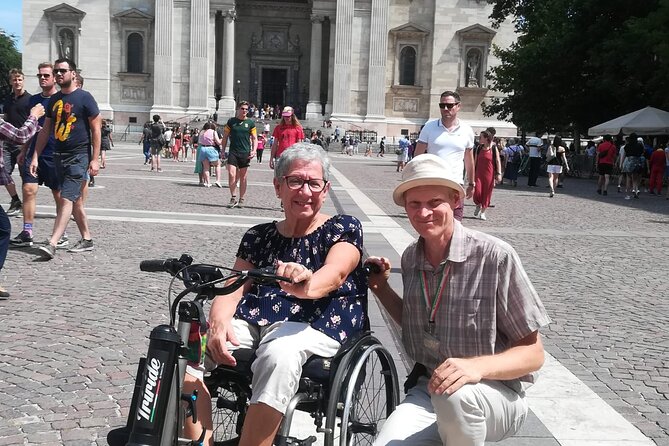
If your travel style is, I want the sights without the guessing, this tour is built for that. Budapest is photogenic, but it can be a workout. This itinerary tackles that head-on by steering you toward stops with usable access and skipping the kind of stairs and levels that can turn a day out into a logistics problem.
The overall rhythm is also smart: you start in the Buda/inner-city orbit, take an accessible bus ride up toward the Castle District, then finish on the flatter side with Heroes’ Square and City Park. You’ll cover big-name landmarks without spending the day negotiating obstacles.
You’re also not locked into one rigid departure. Flexible departures and pickup options help a lot when you’re coordinating mobility needs, and the tour runs in all weather conditions, so plan for rain by bringing what you need (especially for church dress requirements).
You can also read our reviews of more tours and experiences in Budapest.



Getting started at Szent István tér 4 (and how pickup really helps)
The meeting point is Szent István tér 4, 1051 Hungary, and the tour ends back at that same point. If you want pickup, the guide meets you at your hotel reception desk or in front of your accommodation, depending on where you’re staying.
This sounds basic, but for accessibility travel it matters. Door-to-door or near-door pickup can save you from the most tiring part of a sightseeing day: the transfer time. After the tour, drop-off can be arranged back at your hotel or at a selected point of the city, depending on the option chosen.
You’ll also get a mobile ticket, which is convenient if you’re already carrying fewer items because of mobility equipment.
St. Stephen’s Basilica: the elevator access and the wow factor
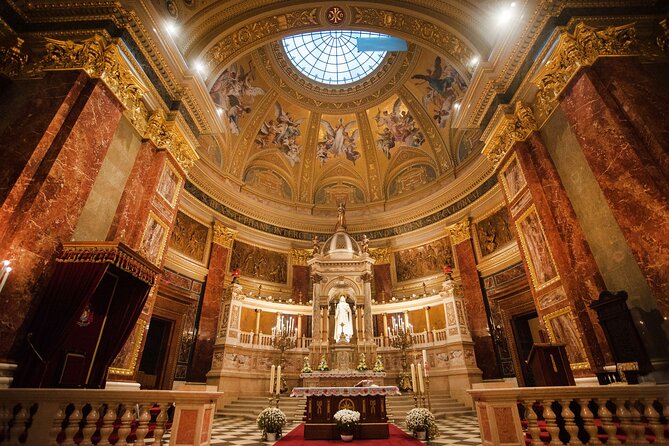
St. Stephen’s Basilica (Szent Istvan Bazilika) is your first big stop, and it’s a powerhouse of art and story. Built to honor Hungary’s first king, who died in 1038, the church is packed with statues and frescoes. One of the most talked-about details is the mummified right hand of the first king.
Here’s the practical accessibility piece: there’s an accessible elevator for wheelchair users to get inside the church. The route does have limits, though. The accessible plan does not include the tower area, including the treasury and the panoramic terrace.
That means you can still see the main interior highlights without turning the day into a scramble over what’s reachable. Timing also makes a difference here: you get about 45 minutes at the basilica, and admission is included (as long as you’re not traveling on Sunday morning religious service hours, when access is affected).
Practical tip: churches require dress that covers legs and shoulders. Bring a layer or scarf so you’re not stuck improvising right before you go in.
The central transit moment: how you reach Buda Castle with less hassle
After the basilica, the tour reaches Budapest’s key inner-city crossroads—the hub that connects you toward the old town of Pest and the commercial tourist center. From there, you’ll take an accessible public bus to the Castle of Buda.
This is one of the best parts of the plan for mobility travelers. It saves you from trying to force a steep, tiring route on your own. It also helps you see the city without spending your energy on movement you don’t need.
One catch to factor in: public transport tickets aren’t included. So budget for transit costs if your option uses buses during the day. It’s the kind of detail that’s easy to miss until you’re standing at the ticket machine, so make sure you know what’s covered in your specific setup.
Buda Castle’s Royal Palace terrace: included views without the ticket maze
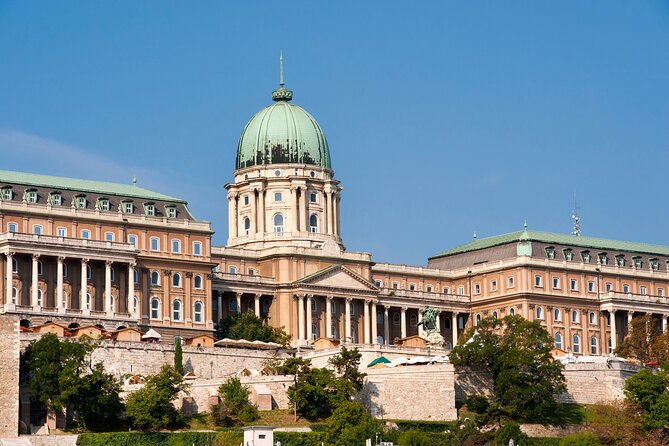
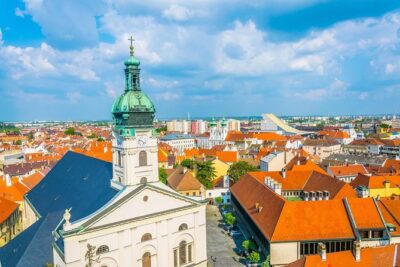
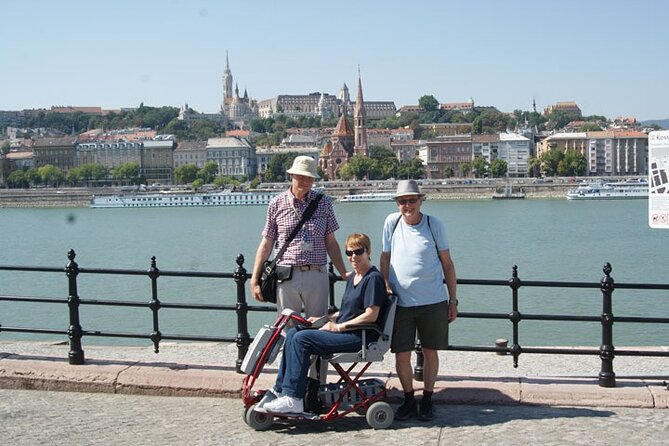
At Buda Castle, you’ll cross the Danube and head into the Castle District. The highlight here is the panoramic terrace of the Royal Palace, with what is essentially the Budapest card: sweeping views across the city.
This is another “value-for-energy” stop. The terrace time is about 45 minutes, and there’s no admission charge listed for this portion of the visit.
Think of it as a payoff. You’ve spent time getting positioned accessibly, and then you get a view that makes the effort feel worth it. Plus, outdoor terrace time tends to be easier to pace than interior sites, because you can linger, pause, and adjust without feeling you’re trapped inside a tight schedule.



Fisherman’s Bastion and Matthias Church: beautiful stops with access limits
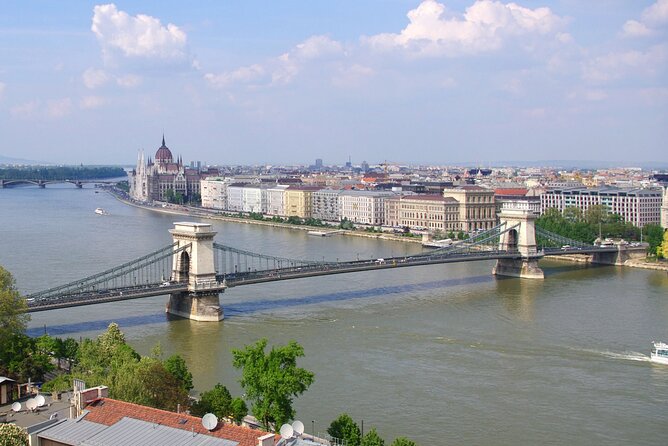
Next comes a cluster of iconic Castle District sights that are famous for a reason.
You’ll visit the Fountain of King Matthias for around 10 minutes, a short and scenic stop that doesn’t eat your day. Then the tour continues to Sandor Palace, where you’ll see the presidential palace area and guards in historical uniforms (about 10 minutes). Admission isn’t included for those stops, which usually means you’re enjoying it as an exterior visit rather than a long indoor tour.
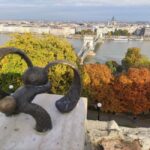
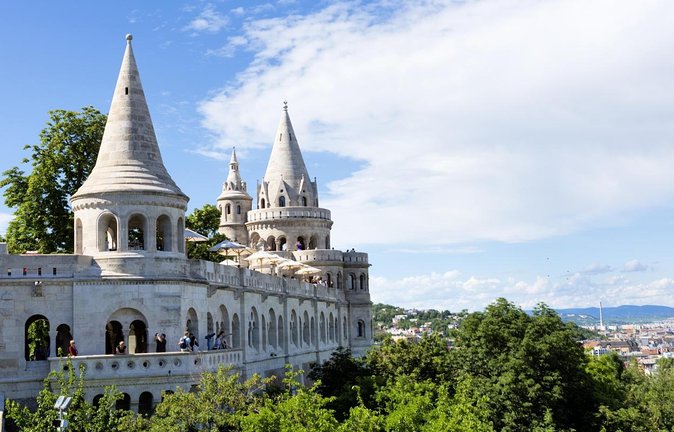
Then you reach Fisherman’s Bastion, with roughly 15 minutes to admire the panorama over the Danube and the Hungarian Parliament building. This is one of those places where photos look like they were staged—except it’s real, and you’re doing it with a route that tries to keep mobility needs in mind.
Matthias Church is where you have to understand the boundaries. The church is not accessible inside for wheelchair users. If you’re a walker, you may be able to do an optional visit, but it’s not included in the wheelchair-access plan. That means you can’t rely on every person in your group experiencing the same interior access at the same time.
If you need inside access for your day to feel complete, you’ll want to talk to the guide early about alternatives. If your goal is mainly exterior sights and views, this section still works well.
The bridge under renovation: why your route may look different
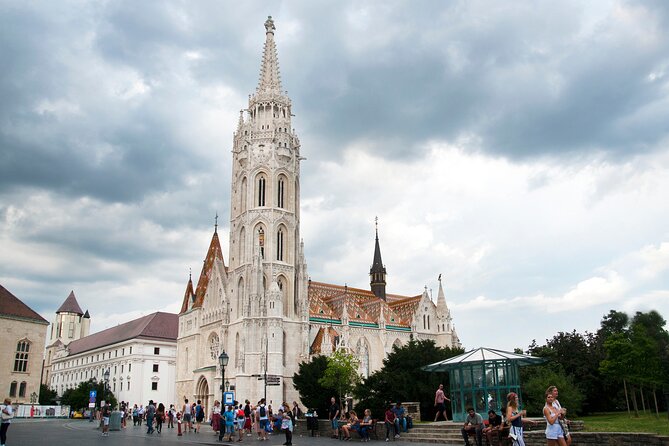
Budapest’s famous bridges are part of the visual story, but this tour has a timing reality right now: the iconic bridge is listed as under renovation from 2021 to 2022.
In practice, that can affect how you move or what you see along the way. The key point for you is not to assume every classic photo angle is available on the exact timeline of your date.
A good guide helps here by adjusting without drama, so your day stays focused on what’s workable and accessible.
Andrássy Avenue to Heroes’ Square: a smart way to cross town
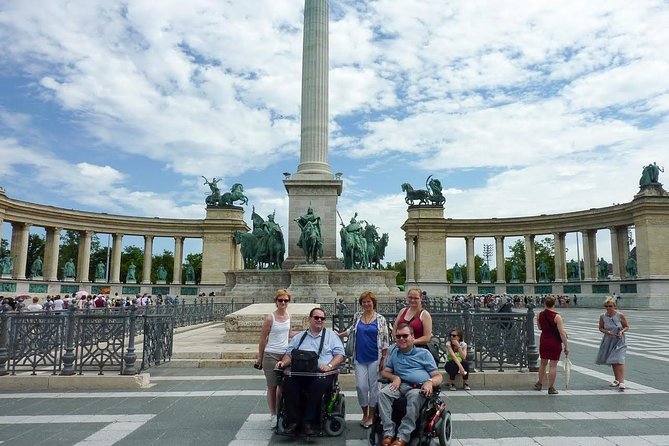
Next you head to Andrássy Avenue, a historic thoroughfare that’s about two miles long. Instead of trekking the whole thing, the tour takes an accessible public bus along the avenue to reach Heroes’ Square.
This is a clever mobility win. You get the sense of place—this grand boulevard vibe—without turning it into a long walking slog.
At Heroes’ Square, you get about 10 minutes to walk through the biggest square in Budapest. The Millennium Monument is the anchor, and the Arts Hall and Fine Arts Museum sit on its sides. It’s a short stop, but the scale hits immediately, especially if you arrive with the right expectations: think orientation and photos, not museum hours.
Millennium Monument and City Park: the history walk that stays manageable
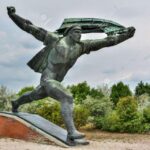
Right at Heroes’ Square, you’ll also visit the Millennium Monument for about 10 minutes. It commemorates 1000 years of Hungarian history, and in front of it you’ll find the grave of the unknown heroes. The colonnades around the monument hold statues of major kings and leaders.
This section is big on meaning and still low-stress for your body. Outdoor monuments and open spaces can be easier to navigate when your main goal is seeing, resting, and keeping control over pace.
Then you move to Vajdahunyad Castle in City Park, with about 15 minutes there. City Park is noted as the oldest public park in the world, and you’ll cross a bridge to reach an island on the lake for the castle area. The courtyard features copies of buildings in different Hungarian architectural styles, which makes the stop feel like a visual survey without needing to go inside multiple museums.
Finally, you have Anonymus Szobor—the Anonymus statue—around 10 minutes. It’s in the castle’s inner courtyard, representing Anonymus, the first history writer of Hungary who lived in the 12th century.
Price and value: what you’re paying for at $142.97
At $142.97 per person, this tour isn’t a budget bus-and-camera deal. But for accessibility travel, the cost can make sense when you look at what’s included.
You get:
- a professional licensed guide
- hotel pickup and drop-off
- entry to St. Stephen’s Basilica (with the Sunday morning caveat)
- flexible departure options and the private-group setup
- a route that is planned to reduce step-heavy problems
You don’t get:
- tickets for every stop (Matthias Church isn’t included, and it’s not accessible inside for wheelchair users)
- lunch or drinks
- public transport tickets
So the value comes from reducing your decision fatigue. The guide isn’t just pointing; you’re being guided through what’s reachable and timed in a way that’s meant to keep you moving. If you’re traveling with mobility needs, that kind of planning can save a lot of trial-and-error and frustration.
One more note: there’s an optional one-hour lunch break that may be excluded from the tour duration. If you need that rest period, plan it early with the guide so it doesn’t shrink the time you expected for later sights.
Accessibility expectations: what’s covered, and what needs a check-in
This tour is clearly built for mobility needs. It includes accessible choices like an elevator to enter St. Stephen’s Basilica, and it aims to avoid steps and levels when possible.
But Budapest is not a flat shopping mall. Even with the best planning, certain classic interiors have limits. The tour data makes the boundaries clear in two places:
- St. Stephen’s Basilica has an elevator into the church, but the tower area and treasury/panoramic terrace are not part of the accessible route.
- Matthias Church is not accessible inside for wheelchair users, and access for a group member who can walk is handled as an optional add-on request.
The smart way to use this tour is to go in with a simple mindset: you’re going to see the major highlights and viewpoints, not chase every possible interior room.
If you want extra help, you can ask for an accessible minibus. Service animals are allowed, and the tour operates in all weather conditions, so come prepared for rain and for church dress requirements.
Who should book this tour (and who might want another plan)
You’ll likely be happiest with this tour if you:
- use a wheelchair or have mobility issues that make stairs and steep detours tough
- want a guided route that takes accessibility into account without forcing you to figure out each barrier alone
- care more about the big sights and views than about squeezing in every interior ticketed experience
It may be less ideal if:
- your priority is full interior access at every famous church in the district
- you need tight, guaranteed timing for multiple ticketed interiors (because certain sites have access limitations and the day is still time-managed)
If your group includes both wheelchair users and walkers, this kind of mix can work well, as long as you accept that not every person will be able to do every interior stop.
Should you book this accessible Budapest tour?
I’d book it if your top goal is a mobility-friendly overview of Budapest’s main landmarks with real guidance. The best part is the practical thinking: elevator access at St. Stephen’s Basilica, included time at Buda Castle’s terrace views, and a route that uses accessible buses rather than forcing your group into a steep, step-heavy battle.
I’d hesitate if you’re expecting that every major indoor attraction is included and fully accessible. The plan is accessibility-first, and certain sites have limits, including Matthias Church interior access for wheelchair users and the basilica’s restricted tower area.
If you match the tour to your needs instead of forcing your needs to match the city, this is one of the more sensible ways to see Budapest in a few hours.
FAQ
Is this tour private?
Yes. It’s a private tour/activity, so only your group participates.
Does the tour offer pickup and drop-off?
Yes. Hotel pickup and drop-off are included, with pickup arranged at your hotel reception desk or in front of your accommodation address. After the tour, drop-off can be possible at your hotel or another selected city point.
What’s included for ticket costs?
St. Stephen’s Basilica entry is included (except Sunday morning religious service). Buda Castle panoramic terrace time is free as listed. Matthias Church entry is not included, and it’s not accessible inside for wheelchair users.
Is St. Stephen’s Basilica wheelchair accessible?
Wheelchair users can use an accessible elevator to enter the church. The tower area, including the treasury and panoramic terrace, is not part of the accessible route.
Can you arrange an accessible minibus?
Yes. The operator can organize an accessible minibus if you wish.
What’s the dress requirement for church areas?
You should cover your legs and shoulders in church areas.