REVIEW · BUDAPEST
Pest side stories with a Historian
Book on Viator →Operated by Budapest Explorers · Bookable on Viator
Pest tells its story one block at a time. This guided walk focuses on Pest side landmarks with a historian guide, so you don’t just see famous buildings—you learn why this city keeps rewriting its identity. You’ll move through squares, avenues, and even the route to the oldest underground in Europe’s storybook.
What I like most is the small-group cap of 10, which keeps the tour personal and easy to follow even when it’s busy outside. I also love that the tour bundles practical value: a guide, refreshments, metro tickets, and free admission at the listed stops.
One thing to consider: it’s a walking tour with a lot of pavement in about three hours, so comfy shoes matter. Also, entry into St. Stephen’s Basilica is optional and depends on the group’s interest.
In This Review
- Key highlights that make this tour worth your time
- A 3-hour Pest loop that actually helps you get oriented
- Historian guidance in a group of 10: why it feels different
- Elizabeth Square, St. Stephen’s Basilica, and Heroes’ Square
- Vajdahunyad Castle: the medieval-looking detour in plain sight
- Andrássy Avenue and Vorosmarty Square: money, monuments, and meaning
- Millennium Underground: what the city looks like from below
- Price and value: what $58.94 buys you here
- Practical tips so the day feels smooth
- Should you book Pest Side Stories with a Historian?
- FAQ
- FAQ
- How long is the Pest Side Stories with a Historian tour?
- What time does the tour start?
- Is the tour offered in English?
- How many people are in the group?
- Where does the tour start?
- Where does the tour end?
- Are tickets or admissions required for the stops?
- What is included in the tour price?
- Can I cancel for a full refund?
- Are service animals allowed?
Key highlights that make this tour worth your time
- Historian-led Pest tour (capped at 10) for more Q&A and less crowd pressure
- Free admission at every listed stop, including Heroes’ Square and Vajdahunyad Castle
- Metro tickets plus refreshments so the tour feels practical, not just sightseeing
- UNESCO Andrássy Avenue with context on why Budapestians care about it
- Millennium Underground—the oldest underground on the European continent
A 3-hour Pest loop that actually helps you get oriented
This tour is built for the first or second afternoon in Budapest. It starts at a clear city landmark—Kempinski Hotel Corvinus Budapest at Erzsébet tér—and then walks you toward St. Stephen’s Basilica (or possibly a nearby central finishing point in Pest). The timing is set for a 2:00 pm start, which is helpful because you’re not fighting the morning crowds when cities feel busiest.
The shape of the route matters. You begin in Elizabeth Square, where the past keeps surfacing under newer life. Then you work your way toward the grand monuments and civic big-hitters—Heroes’ Square, a major church, and Andrássy Avenue—before heading for a very practical kind of curiosity: how the city moves underground.
You’ll cover a lot of ground, but the schedule keeps each main stop short and focused. That’s ideal if you’re the type who likes learning without getting stuck in one place for too long. And if you’ve ever done a bus tour that felt like a long series of photo stops, this format is a breath of fresh air.
You can also read our reviews of more tours and experiences in Budapest.



Historian guidance in a group of 10: why it feels different
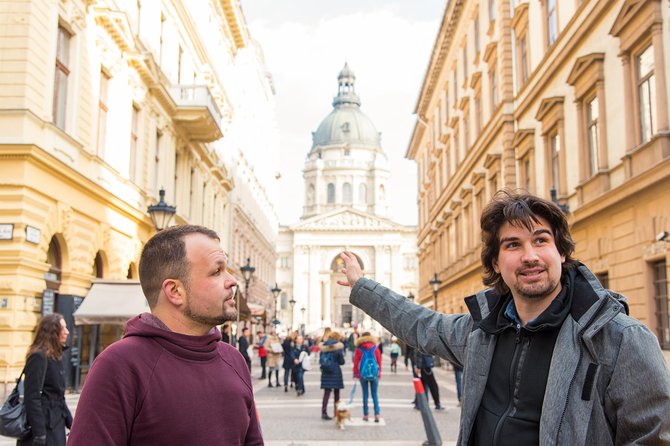
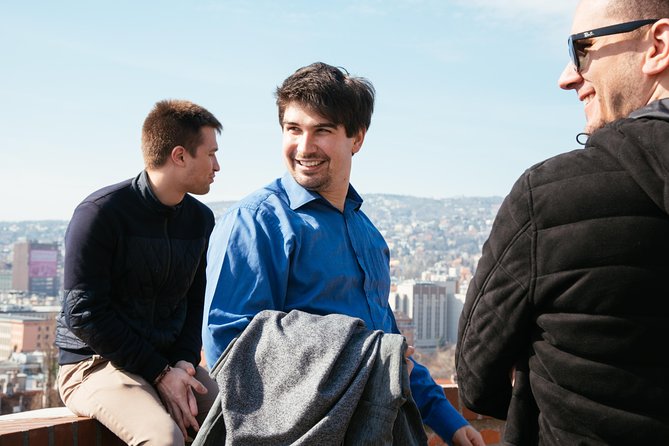
The historian angle is the point here. Instead of just pointing and naming, your guide ties each stop to what was happening in the city and why the look of Pest shifted over time. That kind of storytelling is exactly what turns buildings into clues you can remember.
The best part is the small-group size. With a maximum of 10 people, the pace stays human. If you have a question—about the political shifts behind street names, or why certain buildings look the way they do—you’re more likely to get an answer on the spot rather than later.
I also like that the tour includes real-world comfort. You’re not left to fend for yourself between stops: refreshments are provided, and metro tickets are included for the transit parts of the day. That combination makes the tour feel like it was designed by someone who expects you to move.
In the past, the guides attached to this tour have included people like Steven (the Tall), Greg, and Andrew, and the common theme is that the guide keeps the stories flowing while still managing a pace that doesn’t feel punishing. If you want context without turning the afternoon into a lecture, this is a good match.
Elizabeth Square, St. Stephen’s Basilica, and Heroes’ Square
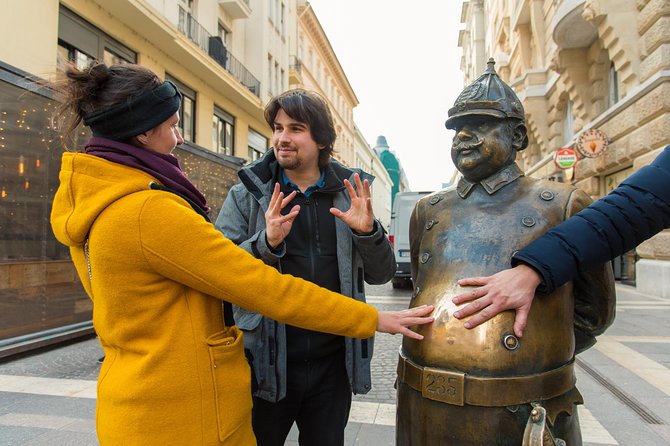
Your first stop is Elizabeth Square (Elizabeth tér), a former market square that also served as a former Stalin square and bus station. Today it’s a young, party area, but the square’s identity is shaped by those layers. The historian angle helps you see the statues and nearby sites as more than décor.
Stop 1 is short—about 20 minutes—which is perfect for “arrive, orient, and learn one big idea.” You get your first reminder that Budapest changes fast, and the street furniture often carries a timeline.
Next you reach St. Stephen’s Basilica (Szent István Bazilika), described as the largest church in Budapest. If the group is interested, you enter. Even if you don’t go inside, this stop still works because you’re learning how the basilica fits into the city’s idea of itself.
Then comes Heroes’ Square, one of Pest’s headline civic spaces. It’s positioned as a prime introduction to more than 1,100 years of Hungarian history, and the time on site is about 30 minutes. This is where you’ll want to slow down a bit and look at the monument setting rather than just walking through it. When the guide connects the symbolism to the story of the country, the square stops being a postcard.
If you’re trying to decide whether this tour is worth it for you, this early segment is the test. If you like the idea of learning how squares and churches reflect bigger historical forces, you’ll probably enjoy the rest just as much.
Vajdahunyad Castle: the medieval-looking detour in plain sight
After Heroes’ Square, you head to Vajdahunyad Castle, with about 30 minutes here. It’s presented as a lesser-visited but very interesting stop, including a medieval-looking castle that was built in 1896. The historian’s promise here is not just to show you the architecture, but to explain why it was built in that style and what was behind the choice.
That matters because Vajdahunyad Castle can look like one specific era. Without context, it’s easy to treat it as scenery. With context, it becomes a statement about memory—how people choose what to celebrate and how they want the past to look in the present.
One practical thing: 30 minutes is enough to form a first impression and still move on. This is a good stop if you like “walk a bit, look closely, understand what you’re seeing” rather than sitting in one spot for a long time.
Andrássy Avenue and Vorosmarty Square: money, monuments, and meaning
Next up is Andrássy Avenue, often described as the pride of Budapestians and a UNESCO World Heritage site since 2002. Your time here is about 30 minutes. Even if you’re not a museum person, UNESCO designations usually come with a reason: the built environment is a big part of the story.
This stop also works because you get a shift from the formal monuments toward the kind of street where everyday life happens. It’s a grand avenue, but it’s still part of the city’s flow.
Then you reach Vörösmarty Square (Vorosmarty ter) for about 15 minutes. This is the stop that highlights central Pest’s commerce side—focusing on businesses and high-end products right in the heart of historical Pest. It’s not just a quick photo moment. The guide’s framing helps you connect the square’s current role to the city’s older layers.
If you’re the type who likes cities as systems—where commerce, politics, and public space overlap—these two stops together create a nice contrast. You go from monuments meant to anchor identity to a square that shows how that identity plays out in the modern city economy.



Millennium Underground: what the city looks like from below
The final major stop is Millennium Underground, described as the oldest underground on the European continent. You get about 30 minutes here, which is a strong block of time for a transit-related attraction. This is where Pest stops being only about what’s on top of the streets and becomes a story about movement.
That’s a big reason this stop fits the tour theme. Budapest history isn’t only in palaces and statues. It also lives in infrastructure—how a city adapts and how people travel through it.
Even if underground attractions aren’t usually your thing, this one has value because it ties into the day’s big message: Pest’s layers keep stacking. Today you’ve already seen squares change roles across eras. Now you get a chance to see how the city literally built a new way to travel.
And because the tour includes metro tickets, the day feels connected rather than random. You’re not just learning about transit history; you’re also set up to keep moving afterward.
Price and value: what $58.94 buys you here
At $58.94 per person for about 3 hours, this isn’t the cheapest way to walk Pest. But it’s also not trying to be. The value comes from what’s included and how that changes your afternoon.
You’re paying for:
- A historian guide who ties the stops together
- Refreshments
- Metro tickets
- A mobile ticket
- Listed stops with free admission
That package matters. Free admission means you avoid the annoying feeling of paying extra on top of a tour price. Metro tickets and refreshments reduce friction, so you’re more likely to stay out enjoying the city rather than thinking about logistics every 10 minutes.
You’re also paying for time management. The schedule gives you a sequence of stops with realistic time blocks, which helps you cover major sites without turning the walk into a full-day grind.
One practical note: this tour is offered in English, and it has a maximum group size of 10. If you want a tour that feels thoughtful rather than rushed, small-group settings like this tend to justify the price.
Practical tips so the day feels smooth
If you’re planning your own afternoon in Pest around this tour, here are the things that make a difference.
Wear comfortable shoes. This is a walking-heavy route, and you’ll be on your feet across multiple stops in a three-hour span.
Bring a light layer. Even in warm months, you can hit shade and sun swings as you move from square to avenue to underground areas.
Use the tour as your orientation tool, not just your check-the-box list. The biggest benefit is learning what to notice afterward. After you’ve heard the connections for Elizabeth Square, Heroes’ Square, and the UNESCO avenue, you’ll start spotting stories in the city’s layout on your own.
And keep your expectations flexible about St. Stephen’s Basilica entry. The visit into the church depends on group interest. If you really want interior time, I’d treat it as a bonus rather than a guaranteed moment.
Should you book Pest Side Stories with a Historian?
If your goal is to understand Budapest’s Pest side quickly, this tour is a smart buy. The small-group cap, the historian-led storytelling, and the way the day mixes major monuments with “why does this place matter” context make it feel useful, not just scenic.
Book it if you like:
- Walking with a purpose
- Asking questions and getting answers
- Learning how squares and streets connect to political and cultural change
Skip it if you want a super light, low-walking afternoon or if you only care about interiors, since one key stop depends on group interest. Otherwise, for an English-speaking, historian-led introduction to central Pest with practical inclusions, this is the kind of tour that makes the city click faster.
FAQ
FAQ
How long is the Pest Side Stories with a Historian tour?
It runs for about 3 hours.
What time does the tour start?
The start time listed is 2:00 pm.
Is the tour offered in English?
Yes, it is offered in English.
How many people are in the group?
The tour has a maximum of 10 travelers.
Where does the tour start?
The meeting point is Kempinski Hotel Corvinus Budapest, Erzsébet tér 7-8, 1051 Hungary.
Where does the tour end?
It ends at St. Stephen’s Basilica, Budapest, Szent István tér 1, 1051 Hungary. The tour might also end at another central point of Pest close to the starting area.
Are tickets or admissions required for the stops?
The listed admissions are ticket free. St. Stephen’s Basilica entry is only done if the group is interested.
What is included in the tour price?
You get a guide, refreshments, metro tickets, and a mobile ticket.
Can I cancel for a full refund?
Yes. Free cancellation is available up to 24 hours in advance for a full refund.
Are service animals allowed?
Yes, service animals are allowed.