REVIEW · BUDAPEST
Communism in Hungary with a Historian
Book on Viator →Operated by Budapest Explorers · Bookable on Viator
Budapest has a second history layer. This guided walk uses communist-era landmarks to show how life changed under Party rule, with stories that make the era feel personal rather than textbook. It starts at Elizabeth Square (the former Stalin square) and builds from there across Buda and Pest.
I love how the tour stays intimate. With a maximum of 10 people, you actually get room to ask questions, and guides like Judit, Gábor, Raymond, Greg, András, and Virág are known for turning facts into human stories.
One thing to consider: most key stops are outside-view history. St. Stephen’s Basilica and the Parliament Building are covered from the outside, and the tour does not include synagogue visits.
In This Review
- Key highlights and why they matter
- Elizabeth Square to Buda and Pest: reading Budapest through communism
- The 3-hour pacing works: metro tickets and a small group
- St. Stephen’s Basilica: how religion survived under Party pressure
- Szabadság tér: memorials, embassies, and the bunker edge
- Kossuth square and Parliament: explaining Bloody Thursday in place
- Ending at Bambi Café: coffee, Cold War vibes, and a final reality check
- Price and what you actually get for $59.13
- Who should book this, and who might want a different tour
- Should you book Communism in Hungary with a Historian?
- FAQ
- FAQ
- How long is the Communism in Hungary with a Historian tour?
- Where does the tour start and what time?
- What language is the tour offered in?
- How many people are in the group?
- Is metro transportation included?
- Is coffee included?
- Are admissions included for St. Stephen’s Basilica and the Hungarian Parliament Building?
Key highlights and why they matter
- Small group size (up to 10) keeps the pace calm and questions welcome.
- Elizabeth Square’s Stalin-era transformation gives you an instant frame for the rest of the walk.
- Szabadság tér memorials, statues, embassies, and bunker remnants let you read the city like a timeline.
- 1956’s Bloody Thursday is explained right at Kossuth square by Parliament so the history lands where it happened.
- Metro tickets included help you cover ground without tiring detours.
- Bambi Café with coffee included gives you a real pause, not just another street-corner photo stop.
Elizabeth Square to Buda and Pest: reading Budapest through communism
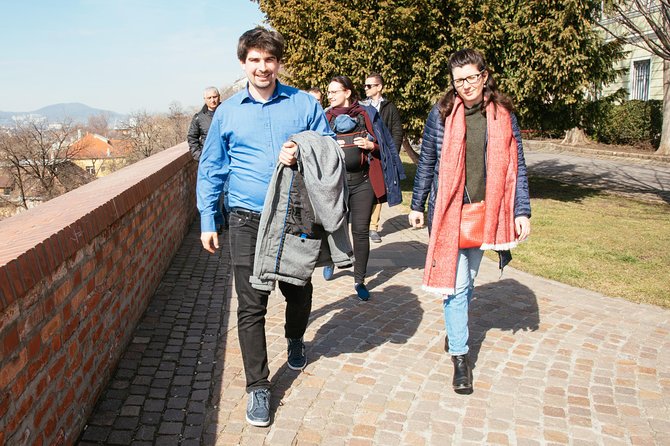
The tour begins at Erzsébet tér 7-8, at the Kempinski Hotel Corvinus area, right where the story of communist Budapest is impossible to ignore. Your first stop is Elizabeth Square, which is remembered for its earlier identity as Stalin square. That change matters, because it’s a quick lesson in how regimes rewrite public space—sometimes by renaming things, sometimes by installing monuments, and often by shaping what people walk past every day.
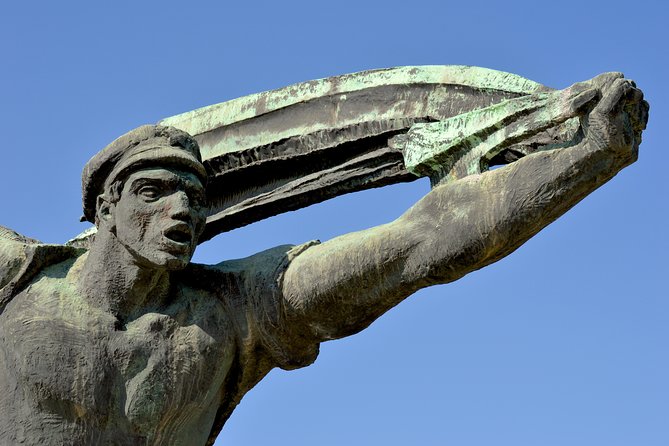
Instead of listing dates and slogans, the guide points out specific monuments and explains what they were meant to communicate. This is where the tour earns its reputation: the walk makes you notice details you would normally speed by. Think of it like learning a new language, but the vocabulary is stone, street layout, and symbolism.
If you’re the kind of person who loves context—why a statue sits where it does, what a memorial is trying to say—this first segment sets you up to enjoy everything that follows.
You can also read our reviews of more tours and experiences in Budapest.


The 3-hour pacing works: metro tickets and a small group
Budapest looks big on a map, but the tour keeps things practical. It runs about 3 hours, starts at 2:00 pm, and includes metro tickets so you’re not stuck doing long stretches on foot. That matters for two reasons.
First, you’ll spend more energy looking and listening, less energy navigating. Second, you’ll see how the city moves—literally—between Buda and Pest during the walk. A guided history tour is often either too slow or too rushed. Here, the structure is tight enough that you still cover several high-impact locations without feeling like a sprint.
And because the group is capped at 10, you don’t get the usual problem of competing for attention. Guides like Judit (praised for warmth and professionalism) and Gábor (praised for an honest, balanced approach) are described as patient and question-friendly. That’s the difference between hearing facts and actually understanding how the era worked.
St. Stephen’s Basilica: how religion survived under Party pressure
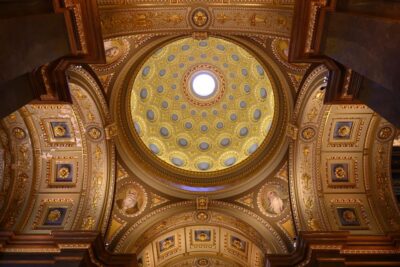
St. Stephen’s Basilica is your next major sight. You’ll walk by and see it from the outside while the guide talks about religious life during Communism. This stop is short—about 15 minutes—but it’s placed on purpose.
Religion shows up in communist history in a few recurring ways: the Party tried to control public life, religious institutions had to negotiate survival, and believers adapted to new limits. The guide also shares family stories connected to that pressure, which is one of the tour’s biggest strengths. Raymond, for example, is specifically praised for bringing the era to life through personal details—things like nationalization, forced living changes, and the stress of being watched. Even when the tour isn’t inside a church or synagogue, those family anecdotes make the outside details feel anchored.
A fair warning: admission is not included for St. Stephen’s Basilica. If you’re hoping for interior architecture time, plan to visit on your own separately.
Szabadság tér: memorials, embassies, and the bunker edge
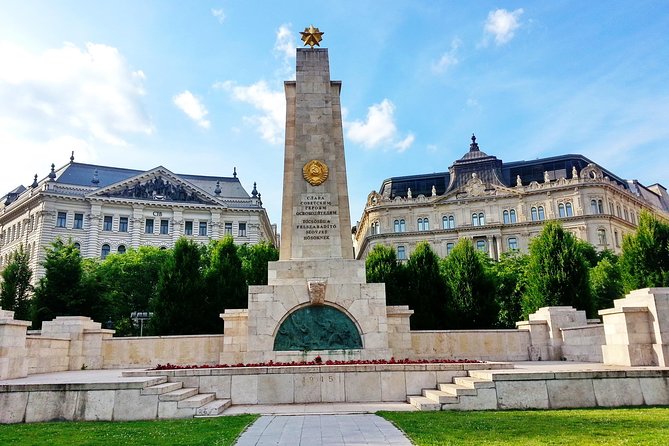
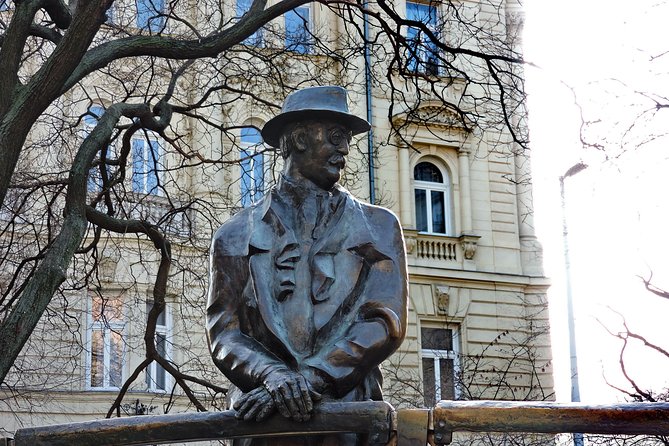
Szabadság tér is where the tour shifts from “what happened” to “what remains.” You get about 45 minutes here, and the guide uses the space like an open-air classroom.
You’ll see remnants of the communist era through:
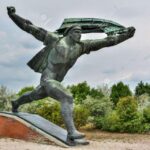
- memorials and statues,
- embassies positioned in the same broader zone of political meaning,
- and even part of a bunker you can view from the outside.
This is the most visual stop for anyone who likes to connect the past to what’s standing today. The bunker detail is especially useful because it makes the Cold War feel less abstract. It’s one thing to hear about security and fear; it’s another to point at the kind of infrastructure people imagined needing.
One practical note: because it’s a walking tour with an outdoor stop, wear shoes you trust. This is not the kind of itinerary that works well for flip-flops or shoes that hate cold pavement.
Kossuth square and Parliament: explaining Bloody Thursday in place
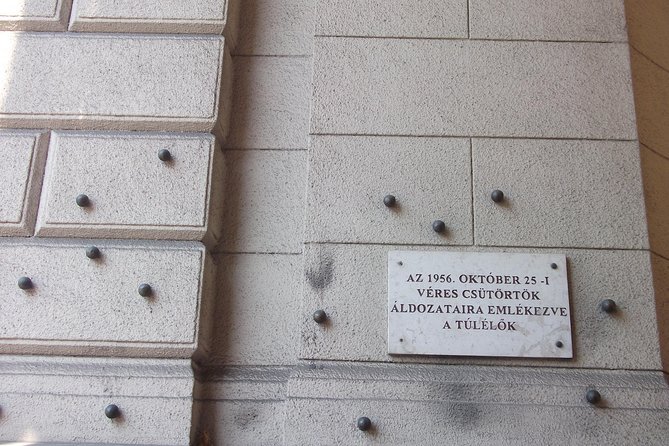
The Hungarian Parliament Building is covered next, again from the outside, with a focused story about the 1956 revolution. The key event discussed is called Bloody Thursday, which happened on Kossuth square in front of the Parliament.
This stop works because location is doing part of the storytelling. When you hear about political violence and public uprising, it’s easy for it to become a set of distant pages. Standing near the Parliament area helps your brain put weight behind what the guide is describing.
The guide also keeps the tone balanced. Several guides are praised for presenting both sides honestly and for using personal perspectives to add texture, not propaganda. That approach matters on a topic like this. Communism in Hungary isn’t just one story; it’s a mix of ideology, daily life, fear, and people trying to keep families afloat.
Again, admission is not included here. You’ll learn what matters, but you won’t be doing a long interior visit during this 3-hour format.


Ending at Bambi Café: coffee, Cold War vibes, and a final reality check
The tour ends at Bambi Café on the Buda side close to the center and near Margaret bridge. On colder or wet days, the ending can shift to the Pest side closer to where you started. Either way, you get a proper break at the end—plus coffee included.
Bambi is practical, not precious. One guide response notes that Bambi opened in 1961 and hasn’t changed too much since, which makes it a fitting place to talk about the kind of everyday life that communism shaped. People also mention discussing what they saw while sharing a drink after the coffee moment, which is exactly what you want from this sort of tour: time to connect history to current Budapest.
If you like to process out loud—asking one more question, comparing what you expected vs. what you learned—this ending space gives you that chance without rushing you back onto the street immediately.
Price and what you actually get for $59.13
At $59.13 per person for about three hours, the value is in the included parts and the guide-led storytelling.
Here’s what you’re paying for that you’d struggle to recreate on your own:
- Small-group format (max 10) rather than a big bus-style walk.
- Metro tickets included, so you save time and don’t have to figure transit during the tour.
- A guided flow through specific politically meaningful sites across Elizabeth Square, Szabadság tér, and the Parliament area.
- A coffee-included stop in a cafe tied to the era’s feel.
Also, the tour is offered in English, uses mobile tickets, and has a start time at 2:00 pm—so it fits easily into a Budapest day plan.
One more practical reality: this kind of topic can be heavy. The guide structure keeps it moving and grounded, with story-driven pacing rather than a nonstop lecture.
If you want to book, do it ahead. The average booking window is about 23 days, so you’ll often have to plan rather than hoping for a last-minute spot.
Who should book this, and who might want a different tour
You’ll likely love this if you:
- care about Cold War and WWII-era influences on Hungary and how that carried into communist rule,
- enjoy hearing how policies affected everyday life—homes, work, churches, and fear of being reported,
- want a walking tour that’s more conversation than museum tour.
It’s also a strong match if you’ve visited Budapest before and felt like you only skimmed the surface. Several guides are praised for revealing a side of the city people don’t notice on repeat visits.
You might want something else if you:
- expect lots of inside access to buildings (this tour covers St. Stephen’s Basilica and Parliament from the outside, and admissions are not included),
- are specifically looking for synagogue visits (the communist tour does not go to synagogues; synagogue visits are handled on other themed tours),
- dislike outdoor walking in wind or rain. This is a city-walk format, so dress for the weather.
Should you book Communism in Hungary with a Historian?
If you want Budapest’s communist past to feel real—through monuments you can point at, moments like Bloody Thursday placed in the exact setting, and family stories that explain what daily pressure could look like—this is a very solid booking.
I’d especially recommend it to history-minded visitors who like balance and Q&A, and to anyone who thinks communism is just politics instead of lived experience. The small group size, metro help, and coffee finish make it a clean, efficient way to spend an afternoon learning something you won’t get from a typical highlights loop.
FAQ
FAQ
How long is the Communism in Hungary with a Historian tour?
It’s about 3 hours.
Where does the tour start and what time?
The tour starts at Kempinski Hotel Corvinus Budapest at Erzsébet tér 7-8, 1051, and it typically starts at 2:00 pm.
What language is the tour offered in?
The tour is offered in English.
How many people are in the group?
The tour has a maximum of 10 travelers.
Is metro transportation included?
Yes. You travel by metro, and metro tickets are included.
Is coffee included?
Yes. The tour includes a stop at a Communist-style cafe and coffee is included.
Are admissions included for St. Stephen’s Basilica and the Hungarian Parliament Building?
No. St. Stephen’s Basilica and the Hungarian Parliament Building are covered with admission not included, and you generally view them from outside on this route.