REVIEW · HISTORICAL TOURS
Budapest Jewish Heritage: Synagogues, Shoes, Secrets & Flódni
Book on Viator →Operated by Fungarian · Bookable on Viator
A walk through Budapest’s lost Jewish world. This tour threads together the Jewish Quarter and World War II memories with synagogue architecture, memorial stops, and a sweet finish of flódni. It runs about 2 hours 45 minutes, with hotel pickup and a guide who keeps the story personal.
I especially like the way you see multiple sides of Jewish life, not just one big landmark. The Great Synagogue alone hits hard with its size and Neolog roots, and then the walk adds contrast with the Rumbach Street Synagogue and an Orthodox congregation. I also like the balance of grief and human resilience, from the Shoes on the Danube memorial to the Carl Lutz rescue story.
One consideration: entrance tickets are not included for most synagogue stops, so you’ll want to plan for extra costs when you arrive. It is still a strong value if you want history with context, not just a checklist.
In This Review
- Key highlights you’ll feel fast
- Jewish Heritage in Budapest: why this route works
- Entering Dohány Street’s Great Synagogue (Nagy Zsinagóga)
- Rumbach Street Synagogue: Otto Wagner’s Moorish details
- Carl Lutz Memorial: rescue history, not just tragedy
- Kazinczy Street Orthodox Synagogue and the Art Nouveau touch
- Shoes on the Danube Bank: a memorial you should not race through
- The Jewish Quarter walk: the ghetto wall you can still find
- Flódni at the end: tasting Hungarian Jewish heritage
- Price and value: what you really get for $102.95
- Logistics that affect your comfort (pickup, pace, and tickets)
- Who should book this tour
- Final call: should you book it?
- FAQ
- What’s the duration of this Budapest Jewish Heritage tour?
- Is hotel pickup included?
- What language is the tour offered in?
- Are synagogue entrance tickets included?
- Is flódni included at the end?
- Is this tour private?
Key highlights you’ll feel fast
- Dohány Street Great Synagogue: learn why it is Europe’s largest synagogue and a centerpiece of Neolog Judaism
- Otto Wagner’s Rumbach Synagogue (1872): see Moorish Revival details made for a “moderate Conservative” community
- Carl Lutz Memorial: connect Budapest’s ghetto story to Swiss diplomacy that helped save tens of thousands
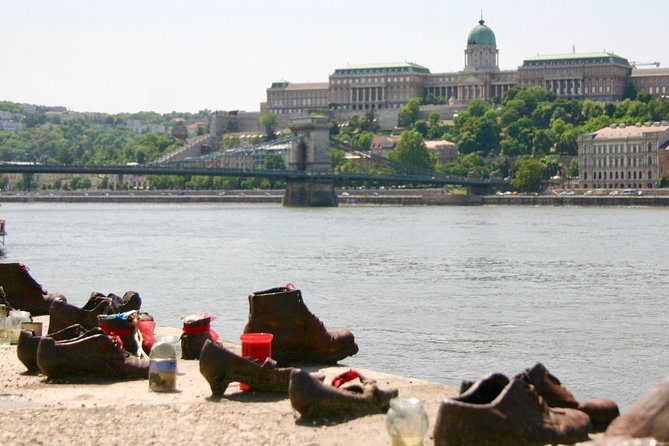
- Shoes on the Danube Bank: a 2005 memorial that forces you to slow down and look
- A small ghetto wall fragment: hear what remains in the city center and why it matters
- Flódni at the end: finish with a Jewish pastry you can taste, not just read about
Jewish Heritage in Budapest: why this route works
Budapest has plenty of sightseeing, but this tour feels different because it treats Jewish heritage as part of how the city actually formed. You start around the Herzl Square area and quickly shift into a guided walk through the Jewish Quarter’s WWII ghetto landscape.
The big win here is pacing. You get architectural stops, then memorial stops, then streetscape history. By the time you reach the last bite of flódni, the story has a shape instead of feeling like disconnected photos.
You can also read our reviews of more historical tours in Budapest



Entering Dohány Street’s Great Synagogue (Nagy Zsinagóga)
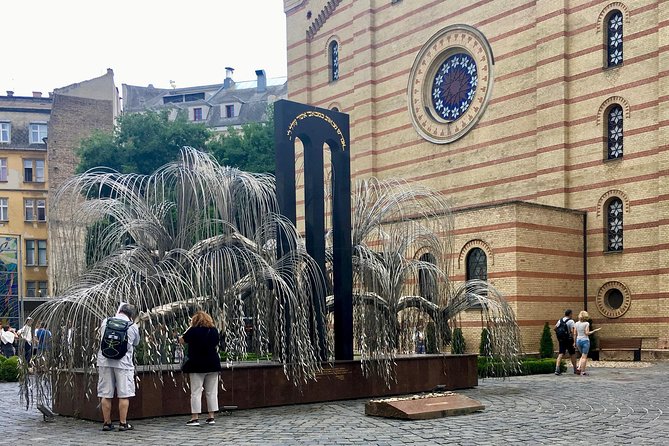
Your first major landmark is the Dohány Street Synagogue, also called the Great Synagogue (Nagy Zsinagóga). This is the largest synagogue in Europe and seats about 3,000 people. It also served as a center of Neolog Judaism, so the guide can connect the building to how Hungarian Jewish communities organized themselves.
What I like about this stop is the mix of design and history. You’ll hear why the synagogue is unique architecturally, but you’ll also get the uncomfortable part: what happened to Hungarian Jewry during World War II. It is not just facts about a building; it is a story about a community that was central to modern Budapest.
Plan for the ticket situation: the admission ticket is not included here. You’ll want cashless payment ready if that is how the venue operates, and a few extra minutes so you do not feel rushed.
Rumbach Street Synagogue: Otto Wagner’s Moorish details
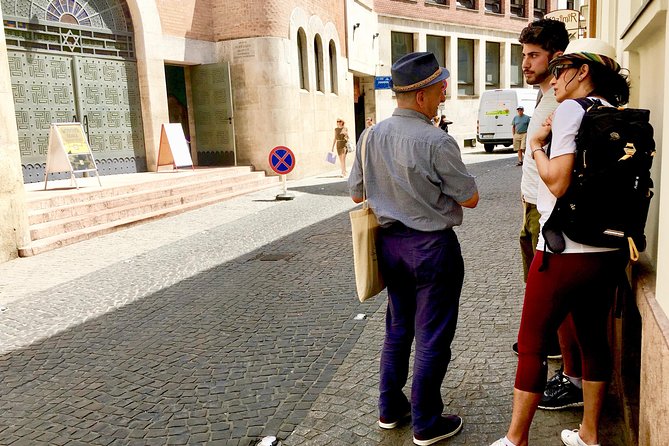
Next comes the Rumbach Street Synagogue, the Moorish Rumbach Sebestyén utca Synagogue. It was built in 1872 by Austrian Secessionist architect Otto Wagner for the moderate Conservative community.
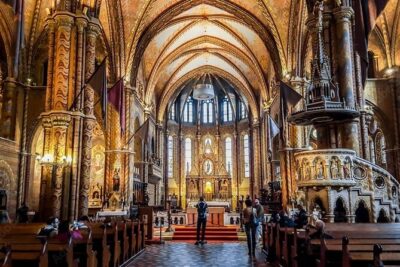
The interior is the star. The decorations can look like they are glowing once the lighting and restoration work settle everything down. The guide points out how this synagogue differs from the others around the area, which is a smart way to learn without memorizing dates.
Admission is also not included for this stop. If you’re traveling in busy seasons, I recommend showing up with a little patience and letting the guide do the timing work for the group.
Carl Lutz Memorial: rescue history, not just tragedy
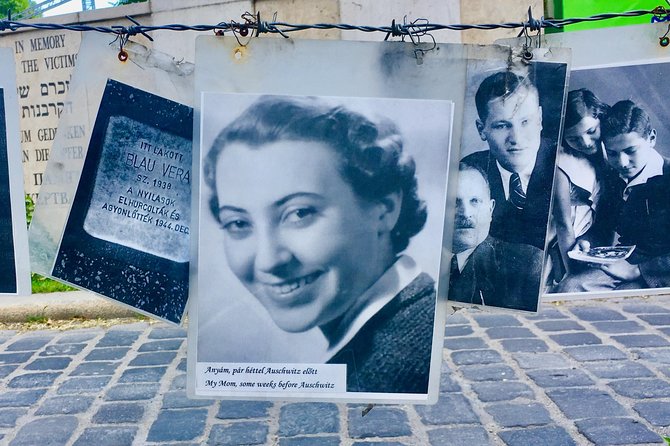
A short stop brings you to the Carl Lutz Memorial. During the war, Carl Lutz, a Swiss diplomat, helped save tens of thousands of Jews in Budapest from persecution and deportation.
This is one of those moments where the guide’s tone matters. A memorial can easily become a quick photo stop, but here it works as a human-scale counterpoint to the ghetto story. You leave with a clearer sense that survival sometimes depended on specific people making specific choices.
Good news: this stop is free, so you’re not juggling entry fees while you’re trying to absorb the meaning.
Kazinczy Street Orthodox Synagogue and the Art Nouveau touch
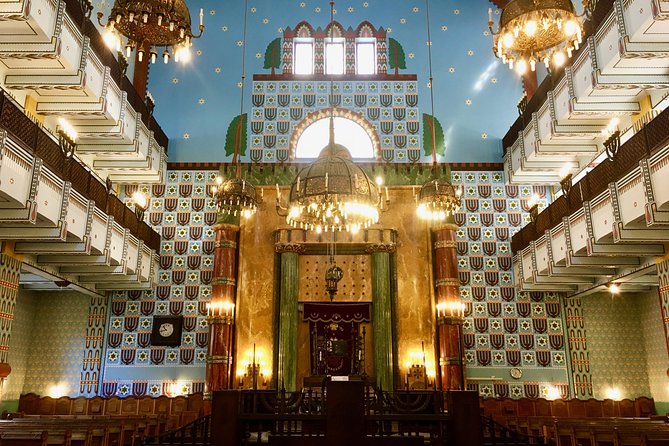
Then you shift again—this time to Budapest’s Orthodox synagogue on a small side street: the Kazinczy Street Synagogue. It was built in 1913 when it would have looked modern, with late art nouveau touches and bright colors throughout.
Look up when you’re inside. The stained-glass windows in the ceiling were designed by Miksa Róth, and that detail gives you a concrete visual anchor for the architecture story. It is the kind of thing you might miss if you only walked past for the exterior.
Like the other main synagogue interiors, admission ticket costs are not included here. So think of this tour as a guided plan that still expects you to handle some venue entry fees.






Shoes on the Danube Bank: a memorial you should not race through
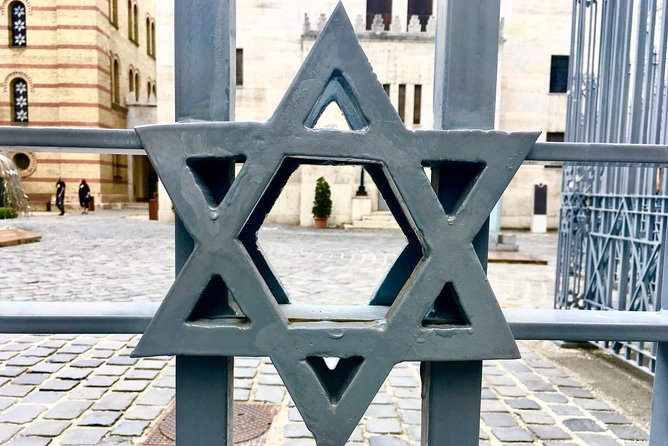
The Shoes on the Danube Bank memorial is included in your tour, and it’s the kind of stop where speed is the enemy. The sculpture was unveiled on April 16, 2005 and remembers Jewish victims murdered at this site during World War II.
The concept is brutally simple: victims were forced to remove their shoes before being shot at the riverbank, and their bodies were carried away by the Danube. The shoes left behind are not just symbolism; they create a shock that makes the numbers feel personal.
This stop takes about 10 minutes, which sounds short until you realize why. If you are someone who needs a minute to stand quietly, you’ll probably want that space built into your own pace.
The Jewish Quarter walk: the ghetto wall you can still find
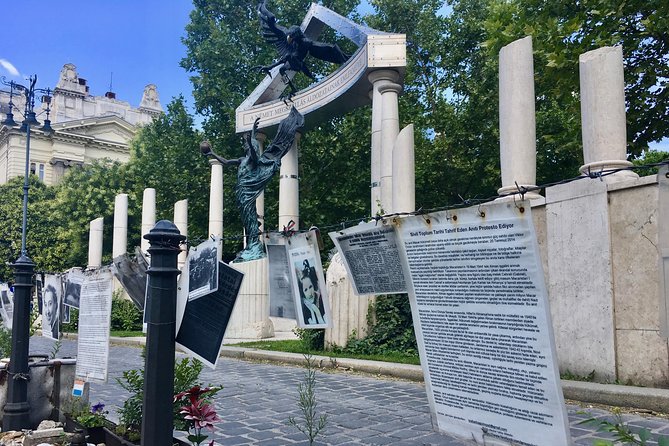
Towards the end of World War II, Budapest’s Jews were herded into a ghetto. Even now, a small section of the ghetto’s wall still stands in the heart of the city, and your guide uses that as a starting point for the street-level history.
You’ll hear about life inside the ghetto: how people were pushed into a smaller world, how daily routines were disrupted, and what happened next. Since the physical structures are not all preserved, the guide’s storytelling matters more here than it would in a museum room.
This stop is free. It is also the part of the tour where you’ll get the most value from listening closely—because you’re learning how to read what you see (and what you cannot see anymore).
Flódni at the end: tasting Hungarian Jewish heritage
The last stop is your food reward and a history lesson you can actually hold in your hands. You finish with a bite of history: flódni, a traditional Jewish pastry.
Flódni is part of the idea that heritage isn’t only buildings and monuments. It’s also what people ate, shared, and kept going through. A 20-minute finish is just enough to reset your emotions after the heavier memorial moments.
This part is included, and it is free as listed for the final stop. You’ll want to plan for it the way you’d plan for dessert anywhere: expect to be a little slower here, since it’s not just a quick snack and move on.
Price and value: what you really get for $102.95
At $102.95 per person for roughly 2 hours 45 minutes, this tour sits in a mid-range bracket for Budapest. The value comes from the focus: you’re paying for an expert-led route with multiple synagogue interiors, major WWII memorial sites, and a guided story you can’t replicate from a self-guided walk.
What you should weigh is the admission split. Several synagogue stops list admission tickets as not included. That means your total spend can rise depending on ticket costs and how long you expect to stay inside each venue.
Still, I think this is good value if your goal is meaning. You are not just seeing three impressive buildings; you’re learning how different communities shaped synagogue design, how the ghetto changed daily life, and how remembrance shows up in public space.
Logistics that affect your comfort (pickup, pace, and tickets)
Hotel pickup is included, and the meeting point is Budapest, Dohány u. 1, 1074 Hungary. The tour ends back at the meeting point, so you do not have to solve the return ride on your own.
It is offered in English, and it uses a mobile ticket. Public transportation tickets are not included, but the start point is near public transit, which is handy if you do not want pickup.
The private format matters too. You’ll only share the experience with your group, which usually makes it easier to ask questions and get answers that match your interests instead of waiting your turn for a canned explanation.
Who should book this tour
This is a strong fit if you want Jewish heritage in Budapest with WWII context and a guide who can connect architecture, community life, and the tragedy of the ghetto era.
It also suits couples, friends, and families who want a human pace instead of a rushed group circuit. In particular, if you’re interested in the differences between synagogue branches and what that looks like in design, this itinerary gives you those comparisons in a logical order.
If you are short on time, you’ll still get a lot of stops, but you’ll want to accept that the experience is built around guided walking and a few indoor ticketed segments.
Final call: should you book it?
Yes, if you want a guided walk that treats the Jewish Quarter as more than a photo set. The mix of synagogues, the Shoes on the Danube memorial, and the ghetto wall story gives you both place and meaning, and the flódni finish keeps the day from feeling emotionally one-note.
If you hate paying extra at each venue, you might want to compare your expectations for synagogue entry fees before booking. Otherwise, this is one of the more thoughtful ways to see Budapest’s Jewish heritage without turning it into a cold checklist.
FAQ
What’s the duration of this Budapest Jewish Heritage tour?
It runs about 2 hours 45 minutes, approximately.
Is hotel pickup included?
Yes, hotel pickup is included.
What language is the tour offered in?
The tour is offered in English.
Are synagogue entrance tickets included?
No. Admission tickets are listed as not included for the Great Synagogue, Rumbach Street Synagogue, and the Orthodox synagogue. The Shoes on the Danube Bank memorial is included, and other listed stops are free.
Is flódni included at the end?
Yes. The tour ends with flódni, a traditional Jewish dessert.
Is this tour private?
Yes. It is a private tour/activity, so only your group participates.