REVIEW · CLASSICAL MUSIC CONCERTS
Budapest: Classical Music Concert in St. Michael’s Church
Book on GetYourGuide →Operated by DKN Zenei Ügynökség Kft. · Bookable on GetYourGuide
Baroque walls and string sounds, one hour. I like the excellent acoustics and I like the feeling of sitting inside St. Michael’s Church while the music fills every corner. One possible drawback: the wooden pews can feel hard, especially if you’re sensitive to long sitting.
I also appreciate the simple choice of 3 seating categories, so you can match comfort and price. In colder months, the heated seat pads mentioned in previous performances can make a huge difference.
The program is packed with familiar names—Vivaldi and Mozart in particular—plus an organ-focused set that keeps the evening varied, not repetitive.
In This Review
- Key things to know before you go
- Why St. Michael’s Church Makes This Concert Feel Worth It
- Booking and Price: How $53 Buys You a Real Music Night
- Choosing Your Seat in St. Michael’s: 3 Categories, Smart Strategy
- What Happens During the Concert: The 70-Minute Program
- Vivaldi and friends: the concert’s most recognizable arc
- Mozart’s Requiem: when the room gets heavier
- Organ Concert: when the sound shifts from strings to space
- The Music Experience: What You’ll Actually Hear and Feel
- Practical Tips for Your Best Seat, Best Night
- Arrive with the right expectations about comfort
- Dress for the church, not for the street
- Keep phones low if you want the sound to feel clean
- Getting There: St. Michael’s Location and Easy Night Pairings
- Who This Concert Suits Best
- Should You Book This St. Michael’s Concert?
- FAQ
- How long is the concert?
- What kind of music is included?
- Where is the concert held?
- How much does it cost?
- Are refreshments included?
- Do I get to choose my seating?
- Is the venue wheelchair accessible?
- What’s the cancellation policy?
- What should I expect for seating comfort?
Key things to know before you go
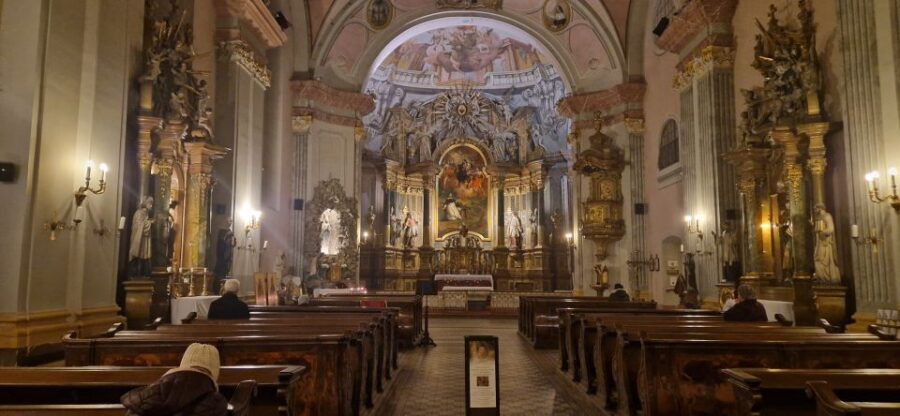
- St. Michael’s Church acoustics make strings and choral writing sound clear and emotional
- Three seating categories let you fine-tune comfort vs. cost
- 70 minutes is long enough for a satisfying program, short enough to stay fresh
- Heated seat pads are a comfort lifesaver in winter
- A mix of composers and moods keeps Vivaldi fans and first-timers both happy
- Gabora Gyula has been highlighted as an exceptional lead musician for this ensemble
Why St. Michael’s Church Makes This Concert Feel Worth It
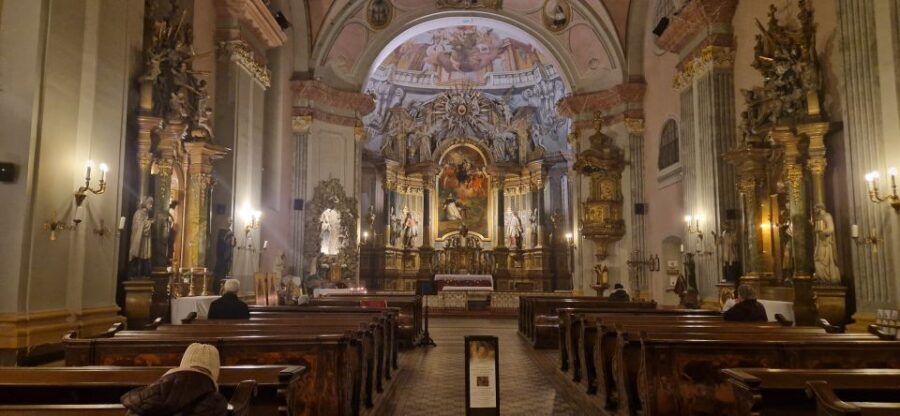
Budapest does classical music really well, but this one has a special advantage: the venue does half the work for you. St. Michael’s Church has that classic old-world baroque look, and the sound doesn’t just land in your ears—it seems to hang in the air. When the ensemble plays, you can hear detail without it turning sterile.
I also like the practical side of this experience. It’s not a whole evening of planning and wandering. It’s a clean, focused event: arrive, find your seat, and let the music run for about 70 minutes. That makes it a great add-on to a day of sightseeing, especially if you want culture without committing to a late-night schedule.
And yes, the church setting matters. People often underestimate how much a room changes what you hear. Here, the acoustics help the strings stay smooth, and the choral-style writing (especially Mozart’s music) lands with weight rather than blur.
You can also read our reviews of more tours and experiences in Budapest


Booking and Price: How $53 Buys You a Real Music Night
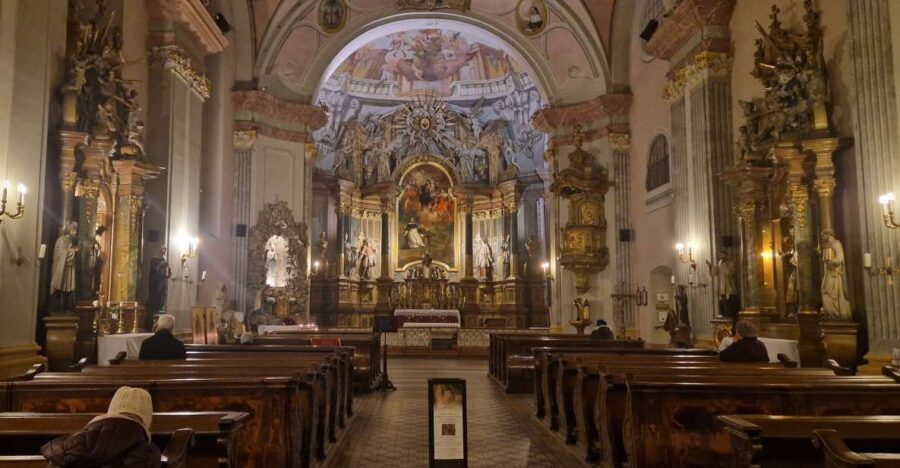
At about $53 per person, you’re paying for three things that matter in Budapest:
- a real concert experience (not background music)
- pre-booked entry, so you’re not gambling on last-minute availability
- a world-class-looking setting for classical music performance
You’re also getting a program that reaches beyond just one composer. Vivaldi shows up hard, Mozart brings the drama, and the organ section adds a different kind of texture. That variety is part of the value. A lot of concerts feel like one long mood. This one spreads the emotions out.
The only caveat is comfort. If you know you won’t tolerate hard wooden pews, the lowest-cost seating may feel like paying for the view of a nice stage while suffering a bit. The solution is simple: pick a better seating category.
Choosing Your Seat in St. Michael’s: 3 Categories, Smart Strategy

The tickets come with three seating categories, and that’s not just marketing. In an old church, the difference between good and uncomfortable can come down to height, angle, and how long you’ll need to sit still.
Here’s how I’d choose if you want the smoothest night:
- If you’re budget-conscious, pick a category that still gets you close enough to feel connected to the musicians.
- If you care about comfort, don’t assume all seats are the same. Reviews point out that the pews can be uncomfortable after a while.
- In colder months, treat the chance of heated seat pads as a serious advantage, not a nice extra.
A small reality check: even with heated pads, you’re still on historic seating. If you’re tall or you like to stretch, arrive ready to settle in and stay patient. One review even joked about the church’s design being old-school about how long you’re expected to stay—good reminder that this is a worship space first, concert hall second.
What Happens During the Concert: The 70-Minute Program
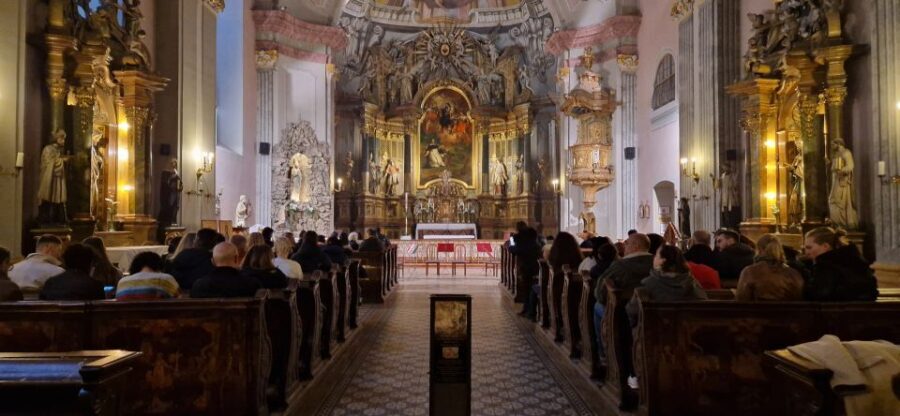
This concert is built around three musical blocks. The whole thing runs about 70 minutes, so it moves at a comfortable, focused pace.
Vivaldi and friends: the concert’s most recognizable arc
The evening begins with a set that includes Vivaldi’s famous style and Baroque-Classical building blocks, plus other well-known names. Expect pieces such as:
- J. Pachelbel, Canon
- Antonio Vivaldi, Gloria
- Albinoni, Adagio
- Schubert, Ave Maria
- Mozart, Church Sonate in D major and Ave Verum
- Saint-Saëns, The Swan
- Mozart, Alleluja
- Vivaldi, The Four Seasons (Summer, Winter, Spring, Autumn)
If you only know one classical composer, you still won’t feel lost. Vivaldi’s Four Seasons is the headline here: it’s vivid, rhythmic, and easy to follow as moods change from movement to movement.





Mozart’s Requiem: when the room gets heavier
Then the program turns toward Mozart’s Requiem in D minor (K. 626). This includes major sections like:
- Introitus, Kyrie
- Dies Irae movements (including Tuba mirum and Rex Tremendae)
- Offertorium (Domine Jesu)
- Sanctus and Benedictus
- Agnus Dei
- Communio (Lux Aeterna)
This part changes the emotional temperature fast. In a church like this, Mozart’s writing doesn’t sound like a museum display. It sounds urgent, like it’s asking you to listen with your whole attention.
Organ Concert: when the sound shifts from strings to space
The final block leans into organ and orchestral-style color, with works listed such as:
- Bach, Toccata and Air
- Handel, Messiah (Rejoice) and Xerxes (Largo)
- Vivaldi, including a Largo from Winter excerpt
- Gounod, Ave Maria
- Widor, Toccata from the Organ Symphony
- Liszt, Ave Maris Stella
- Franck, Panis Angelicus
- Massenet, Thais Meditation
- Schubert, Ave Maria
- Mozart, Alleluja from Exultant, Jubilate
If you’re wondering how an organ set fits in without feeling random: it works because the church itself is already built for sustained sound. Organ music doesn’t just play; it fills the room. The result is a nice contrast after the more direct string-driven sections.
The Music Experience: What You’ll Actually Hear and Feel
I love concerts like this because they’re not complicated to enjoy. Even if you’re not a “serious classical listener,” the melodies are recognizable, and the transitions between composers keep the ears awake.
Here’s what tends to feel best in this venue:
- Strings sound warm and detailed, so you catch more than just the main theme.
- Choral and sacred passages feel natural in the church setting.
- The Four Seasons movements give you a built-in emotional storyline—season-to-season changes act like a narrative.
There’s also a human element. Reviews have highlighted strong performance leadership, including Gabora Gyula as an exceptional lead. When a lead musician shapes the group sound well, the whole orchestra feels more “one voice,” and that’s what you want from an ensemble night.
Practical Tips for Your Best Seat, Best Night
If you want an easy, low-stress evening, focus on the few things that matter.
Arrive with the right expectations about comfort
The pews are historic wooden benches. That means:
- plan to sit still for the full 70 minutes
- consider the heated seat pads if you’re visiting in cold weather
- don’t assume there are soft cushions waiting for you
If you’re sensitive to discomfort, spend a little extra on the seating category instead of hoping it won’t bother you.
Dress for the church, not for the street
One review noted there’s no air conditioning in the church, which can make it warm at times. In practice, I’d dress like you’re entering a cool stone building that might run warm when packed. Bring a light layer you can adjust.
Keep phones low if you want the sound to feel clean
A few people complained about distracting screens and standing to record. I get it: you’ll want memories. Still, if you care about hearing the performance without interruptions, keep your phone away during quiet passages. This kind of music deserves a dark, still audience.
Getting There: St. Michael’s Location and Easy Night Pairings
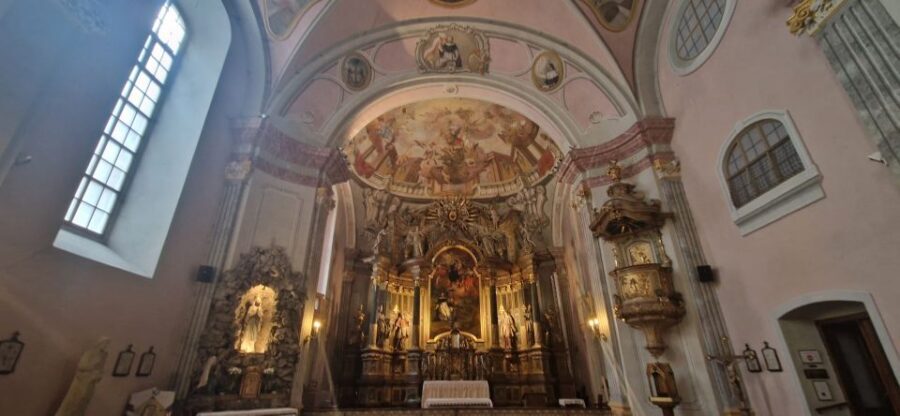
The meeting point is St. Michael’s Church in Budapest, in the inner city area near the main central streets. That makes this concert a good “wrap” for your evening—especially if you’re already walking around the historic center.
It also pairs well with the kind of night where you want one cultural anchor and then you’re done. No long transfer to another district. No complicated schedule. Just a short concert that ends while you still have energy.
Who This Concert Suits Best
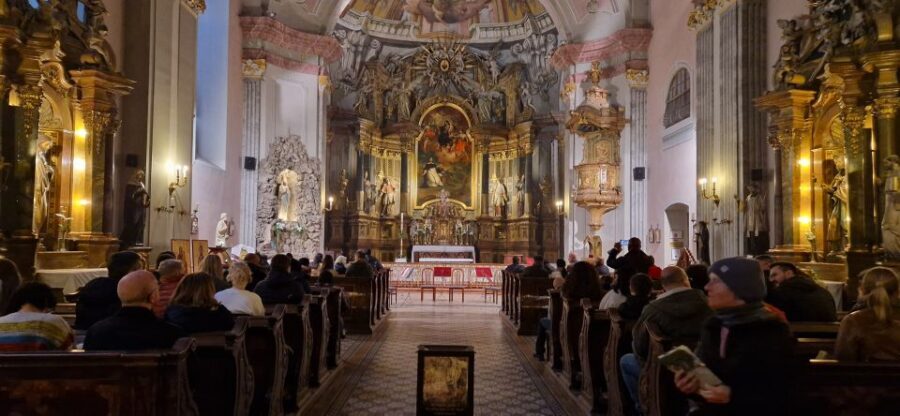
This is a strong pick if you want:
- a classic Budapest experience with a real musical program
- recognizable composers like Vivaldi and Mozart
- a venue with acoustics that support both strings and sacred writing
It’s especially good for:
- first-time concertgoers who want something approachable but still serious
- people who like variety: Baroque, sacred music, and organ all in one night
- visitors who don’t want a half-day commitment
If you’re extremely sensitive to hard seating, prioritize the better seating category and plan to dress for comfort.
Should You Book This St. Michael’s Concert?
I’d book it if you want a short, high-impact classical night in a stunning church, and you’re happy to choose your seat thoughtfully. The acoustics and atmosphere are the big wins here, and the program gives you familiar favorites plus deeper sacred works like Mozart’s Requiem.
Skip it only if you know you can’t handle wooden pew comfort or you’re planning to spend the entire concert trying to optimize your posture. In that case, you might prefer a modern hall with softer seating.
If you can handle one hour of sitting, though, this is the kind of evening that leaves a lingering feeling long after the last note.
FAQ
How long is the concert?
The concert lasts about 70 minutes.
What kind of music is included?
The program includes works like Vivaldi’s Four Seasons, Mozart’s Requiem, and an organ-focused concert set with composers such as Bach, Handel, Gounod, Widor, Liszt, Franck, Massenet, Schubert, and Mozart.
Where is the concert held?
It takes place at St. Michael’s Church in Budapest (the Inner-City Church of Saint Michael).
How much does it cost?
The price is listed at about $53 per person.
Are refreshments included?
Food and drinks are not included.
Do I get to choose my seating?
Yes. You can pick from 3 seating categories.
Is the venue wheelchair accessible?
Yes, it is wheelchair accessible.
What’s the cancellation policy?
Free cancellation is available up to 24 hours in advance for a full refund.
What should I expect for seating comfort?
Seats are in historic church pews, which may feel uncomfortable for some people. Heated seat pads have been mentioned in the experience.